
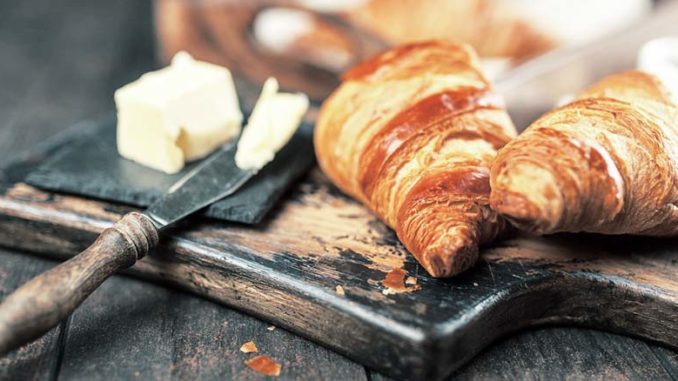
A growing consumer desire for affordable indulgences should assist the market for frozen bakery goods such as pastries, reports Jonathan Thomas.
Although most bakery goods are still consumed fresh, there is also a sizeable demand for frozen varieties in sectors such as bread, cakes and pastries.
The frozen market encompasses a range of sectors, including frozen dough supplied to outlets such as retailers and foodservice operators for the preparation of finished products on the premises. Frozen bakery products offer numerous advantages, examples of which include improved convenience for businesses and consumers, as well as lower labour costs and a reduction in food waste.
A range of freezing technologies are used within the baking industry. One of the most common is blast freezing, whereby high-performance equipment reduces temperatures rapidly by blowing intensely cold air across food surfaces. This speeds up the freezing process considerably, preventing the formation of large ice crystals and protecting the texture, flavour and nutritional qualities of foods.
As well as offering shorter times, blast freezing is also considered both efficient and versatile, as well as allowing for efficient handling and storage of foods. It is widely used in the manufacture of sweet pastries such as croissants. Spiral freezing technology is also becoming increasingly widespread within the global bakery industry.
This utilises a conveyor belt system upon which foods are gradually cooled as they move through a spiral-shaped freezing tunnel. The main appeal of this method is its continuous freezing process, which allows for the efficient processing of large volumes of products. This ensures uniform cooling, thereby reducing freezing time (and hence energy usage), as well as preserving product quality. It is becoming widely used for bakery goods such as pastries, as it can preserve freshness and texture.
Technology for bakeries
As is the case elsewhere in the food industry, advances in technology are influencing the frozen bakery sector. Automation is becoming more apparent – for example, automated kneading systems are being adopted to improve quality and consistency.
Smart ovens with real-time monitoring capabilities are now being used for baking, while the future is likely to witness the deployment of AI-enabled predictive analytics to optimise energy usage, efficiency, etc. One of the main market drivers for frozen bakery goods is the continued expansion of the in-store bakery (ISB) sector.
For customers such as supermarkets and grocery retailers, offering freshly baked products can represent an important source of revenue. For these companies, the choice usually lies between making bakery goods such as bread from scratch using raw ingredients or, more commonly in the present market, opting for dough which is part-baked then frozen. This enables food retailers to offer a wide choice of fresh bakery goods, turning out higher volumes at lower cost and making their production systems more efficient and cost effective.
The UK has one of the Europe’s largest ISB markets, where sales of bakery goods via craft and artisanal bakers are lower compared with countries such as France and Italy. The UK market is dominated by the country’s leading supermarket chains, with Lidl having recently overtaken Tesco at the top – both companies account for shares in the region of 18%.
Another recent growth driver has been the increased integration of high-profile bakery brands (e.g. Gail’s) into the ISB fixtures of retailers such as Waitrose as the sector has developed. Sweet pastries such as croissants and pain au chocolate have made great strides within the ISB market in the UK in recent years – according to latest estimates, 122 of Lidl’s All Butter Croissant are sold every minute on average.
The importance of the ISB sector for sweet pastries can be highlighted by research carried out by Delifrance in 2024, which surveyed the opinions of 1,000 UK-based adults who regularly buy into the viennoiserie market. This found that supermarket ISBs represented the most popular venue for purchasing sweet pastries, used by 47% of respondents.
This figure decreases to 42% for pre-packed pastries bought from supermarkets, 34% for independent or chain bakeries and 30% for cafes and coffee shops. ISB channels in convenience stores and/or petrol forecourts were mentioned by 28% of consumers. Outside the UK, there is also evidence that ISBs are becoming an increasing popular distribution channel for the sale of sweet pastries and viennoiserie in European countries such as France.
Around 80% of French sales of sweet pastries are now produced industrially using frozen dough, a trend that has prompted fears over the long-term survival of many of the country’s smaller craft bakers.
To read the entire article, please access your complimentary e-copy of Frozen Food Europe September-October, 2026 issue here.