
The current economic conditions have significantly altered consumer behavior of retail shoppers, determining them to choose private label products more often. However, purchasing goods from this category has become a ritual which surpasses the economic downturn, according to the latest study issued by the Private Label Manufacturers Association (PLMA), presented during the latest PLMA Trade Fair, World of Private Label in Amsterdam, May 27th -29th.
Private labels continue to benefit by a strong growth potential in Europe, according to the results of the PLMA study, presented by Professor Kitty Koelemeijer of Nyenrode Business Universiteit, who helped draw up the framework and compile the results. Because of the fact that 89 per cent of the 11,000 respondents claimed that the economic conditions had a significant impact on their purchasing behavior, most said they were forced to make changes regarding the products they chose when shopping.
Important changes in consumption
According to data from the study presented at this edition of the PLMA in Amsterdam, among the most significant consumer behavior changes occurring in retail as a consequence of adapting to the deterioration of the European economy, there are as follows: reducing impulse purchases (53 per cent of respondents), buying more of the retailers’ own labels (50%), reducing day-to-day expenses associated with shopping trips (39%), buying in bulk, rather than individual items (37%), reducing the amount of expensive items such as meat, fish, ready meals and other convenience goods, or giving up on them altogether (34%). Since during the first semester of 2013, over 43 per cent of the consumers interviewed said that the economic status of their household worsened, their expectations for the second half of this year is moderately negative, with 52 per cent not expecting significant changes either way and 29 per cent preparing for the worst.
Consumer perception of own labels
Going beyond the financial difficulties that encompass the European continent, including private labels in the daily shopping ritual has become a habit for most consumers. This permanent fixture is confirmed by the frequency with which shoppers declare they choose own labels – almost 89 per cent of them say they decide to buy them often and very often when entering a retail store, while 96 per cent say they will continue to buy private labels even when the economy recovers. When asked what reasons motivate them to make such decisions, most shoppers say they are personally satisfied with the category (53%) and consider private labels goods to be of a superior quality (49%). They are also strongly motivated by special promotions and price offers (42%) and by innovations associated with such products (27%), according to the PLMA study, which included consumers from Belgium, the Czech Republic, Denmark, Finland, France, Germany, Hungary, Italy, The Netherlands, Norway, Poland, Spain, Sweden and The UK. “Private label plays a fundamental role in the lives of shoppers across Europe and market share will continue to expand. Forty-six per cent purchase them frequently. In the year ahead, one in four believe that they will buy a larger amount of own brands than currently. Even when the economy gets better, consumers say that they will stick with private label: eight in ten said that after the economy improves they would not stop purchasing own brands”, said President of the Private Label Manufacturers Association, Brian Sharoff.
European diversity
Own labels evolve in a fragmented fashion, depending on category and channel, but also on country and region, according to information presented by Jean-Jacques Vandenheede, Retail Insights Director, The Nielsen Company. He said the segment will evolve slowly and that product categories will be “conquered” one step at a time, depending more on the added value conveyed by own labels, rather than on the low price factor associated with such goods. Also, retail brands growth is correlated to modern retail deployment, while economic trouble causes at most a marginally positive impact, which is to say that the success of the category should not be attributed to the worsening of the E.U economies. With regards to the target consumers of private labels, the Nielsen study shows that most buyers of such products are generally people with larger families with children, more affluent, educated and, contrary to misconceptions, they are not low budget consumers who only seek bargains. Furthermore, the category does not represent a real threat to producers’ A brands, but rather strong competition to national B and C brands, while its evolution knows impressive growth and popularity in countries such as Switzerland (45% total market share), Great Britain (40,8%), Spain (40,6%), Portugal (33,3%) and Germany (32,4%).
World of Private Label 2013
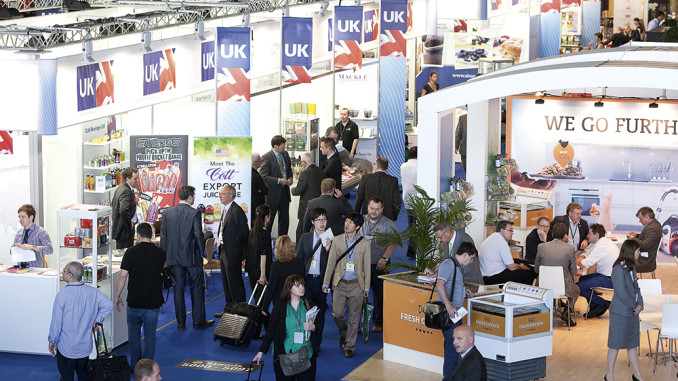
 PLMA 2013 – World of Private Label, taking place at the RAI Exhibition Center in Amsterdam was the largest edition so far, according to organizers. A record number of retail visitors, more than 9.000 took part, looking for new products, packaging and ideas to build their private label programs. Also present, there were more than 3,800 exhibit stands and 2,100 exhibitors from 70 countries, of which several new international pavilions, including the ones from Hungary, Croatia, Korea, Ecuador, Mexico and Murcia, Spain. Other highlights at this year’s Trade Show include PLMA’s Idea Supermarket, where visitors could see private label products on display from retailers in Europe, North and South America, and Asia, as well as the New Product Expo, which displays the new private label products from exhibitors. “The reactions of exhibitors and visitors have been extremely positive and reflect the growth of the trade show every year. The international business atmosphere is highly appreciated by the suppliers as well as by the distributors and contributes to creating new businesses, strengthen existing contacts and finding new ideas and concepts,” said PLMA President Brian Sharoff, exclusively for Frozen Food Europe.