
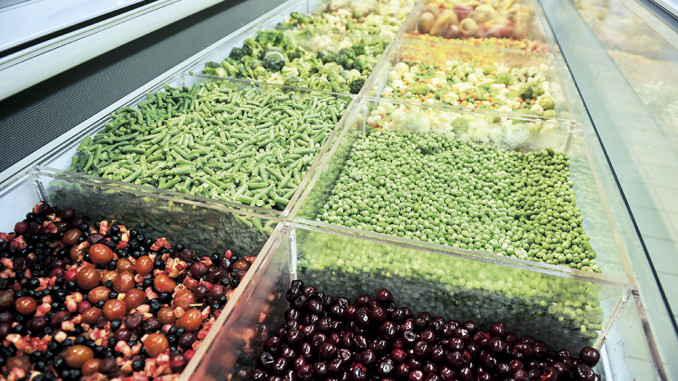
The trend towards private label products within the frozen foods industry continues at pace.
Private label foods have been one of the main beneficiaries of the recent economic downturn, both in Europe and further afield. As consumer spending has fallen, more shoppers have been inclined to seek out cheaper groceries, in order to reduce their bills. The market for private label foods has also been aided by the increasing range and quality of products on offer, driven by the major European supermarket groups. In many instances, private label foods have come to be viewed as at least on a par with their branded equivalents, thereby offering value for money.
 Despite the fact that the economic situation is improving in some parts of Europe, the trend towards private label foods shows no signs of abating. In the UK, for example, almost 40% of consumers plan to buy more private label groceries over the coming year, mainly as a result of rising food prices. It is thought in many quarters that this loyalty towards private label foods may remain even after the effects of the economic recession have passed.
According to data from PLMA International, penetration of private label products within the retail grocery market is highest in Switzerland, at more than half (53%) in volume terms. This figure decreases to 51% in Spain and 45% in the UK. At the other end of the scale, private label products account for just 20% of the Italian retail grocery market.
Further east, the penetration of private label groceries is generally lower, although it continues to increase. Within the last year, for example, penetration in both Hungary and Slovakia rose to 30% for the first time, whilst the figure in Poland increased from 25% to 28%. Data from the same organization states that 46% of European shoppers purchase private label groceries on a frequent basis.
As far as frozen foods are concerned, the penetration of private label products varies according to country and product category. From a supply perspective, it is also worth noting the fact that many leading producers of frozen foods also supply own-label customers. In the large UK market, own-label products accounted for a sizeable 61% of frozen foods category in 2013, although sales within the sector rose by a very modest 1% during this time. The share of the own-label sector drops to 54% in France and 30% in the smaller Italian market. In most instances, the share of the market taken by own-label frozen foods is higher in volume terms, since they are frequently sold at a lower price than their branded counterparts. Sales are generally highest in markets such as the UK and Germany, where the frozen foods industry is largest. Broken down by product sector, private labels command an especially strong position within categories such as frozen vegetables, frozen natural fish and ice cream. Some of the industry’s main sectors will now be analyzed in more detail.
Ice Cream
In many instances, own brands account for the majority of ice cream sales across Western Europe. In the large UK market, for example, own-label products account for 30% of the take-home ice cream sector, a figure which compares with almost 50% by value in Germany and around two-thirds by volume. In France, the own-label sector accounts for almost a third (31%) of overall market value, rising to 47% in volume terms. Sectors of the French market where the own-label presence is especially strong include take-home tubs (where own brands account for 34% of sales) and children’s ice cream, where their share exceeds 40%.
The largest supplier of own-label ice cream in Western Europe is R & R Ice Cream, which accounts for 10% of sales in the UK. It is also present in the Italian market, having acquired leading own-label supplier Eskigal in 2012. The following year saw the company come under the control of private equity firm PAI Partners, having formerly been owned by Oaktree Capital. At the time of the sale, R & R’s annual revenues were worth in the region of EUR600m, whilst it operated 11 production sites across Europe. In addition to its own-label business, the company also supplies ice cream brands such as Rolo, Toffee Crisp and Rowntree’s Fruit Pastilles. Another supplier worthy of mention is Spain’s Ice Cream Factory Company (ICFC), which manufactures own-label ice cream for major food retailers such as Carrefour. The company, which exports its products to 20 countries, is also strong in the market for ice cream sold through foodservice channels such as hotels and restaurants. Formerly known as Avidesa, the company’s ice cream range includes tubs and cones.
 Frozen Potato Products
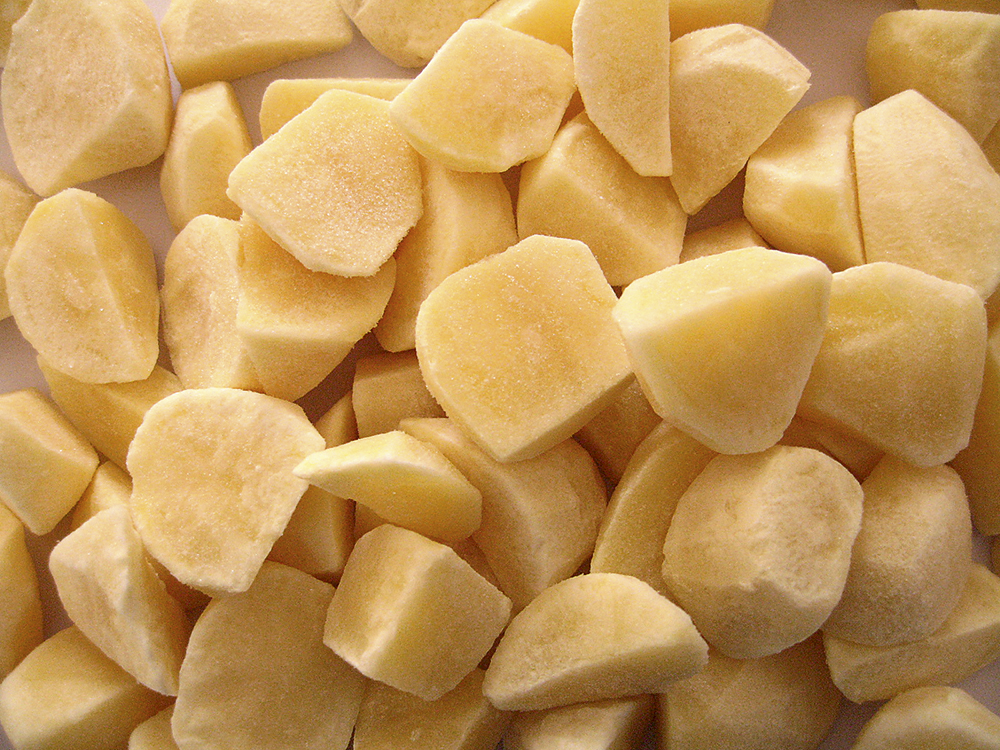
The potato products sector has been one of the better performers within the European frozen foods market of late, having successfully tapped into the growing consumer demand for value-for-money meal accompaniments and products which can be shared during in-home entertaining occasions. Own-label products have benefited to a large extent from this trend – for example, the sector accounts for a leading 45% of value sales in France, a figure which compares with 40% in the Spanish market. Own-label products also account for over a quarter (26%) of the Spanish frozen potato croquettes category. Most of the leading suppliers in the European market compete within the own-label sector. Market leader McCain, for instance, operates a Private Label division, which is believed to service many of the region’s largest markets. Rival suppliers such as Lamb Weston and Aviko also manufacture frozen potato products for own-label customers.
Frozen Fish/Seafood
Within the frozen fish and seafood market, own labels are prevalent in sectors ranging from natural fish to prepared products, one example of which is coated fish and seafood. In Germany, the own-label sector currently accounts for 40% of sales of frozen fish and seafood, whilst it also has a strong presence in the UK and Ireland. In France, own brands account for over a third (35%) of sales of frozen breaded fish products, rising to three-quarters (75%) of the frozen natural fish category. In Spain, meanwhile, own brands account for over half (51%) of sales of frozen natural fish and more than 60% of frozen prepared products.
One of the region’s leading suppliers of own-label frozen fish and seafood is Findus, which owns the Young’s business in the UK. The company also competes in the chilled fish and seafood category, and supplies customers in the foodservice industry. One of the company’s competitors in the large UK market is Coldwater Seafoods, which occupies a strong position in the frozen and chilled coated fish products sector. Coldwater’s own-label customers include Asda, Tesco (from which it was awarded a new chilled coated fish contract in the autumn of 2011) and Marks & Spencer – this latter business is now worth almost GBP50m per annum, having grown significantly of late. During April 2013, the company completed the installation of a new production line worth GBP2.2m, as part of its expansion.
 Frozen Pizza
Own brands feature strongly across throughout the pizza market in Western Europe, although their share is lower for frozen pizza lines compared with the chilled category. The own-label sector accounts for 42% of the French frozen pizza market, for example, a figure which compares with around 30% in the UK and 26% in Germany. Many of Europe’s largest pizza suppliers also manufacture for own-label customers – notable examples include the UK’s 2 Sisters Food Group (which includes the former Northern Foods operations) and Freiberger of Germany.
Frozen Vegetables
The share of the market taken by own brands is especially high within the frozen vegetables sector. In most instances, a wide variety of frozen vegetables are stocked by the leading food retailers, and sales have been aided by trends such as the development of steam-able varieties (which address consumer health concerns). Spain, own-label products account for almost 90% of the market in volume terms, a figure which decreases to 75% in value terms. In France, own brands account for more than 70% of the frozen vegetables market.