
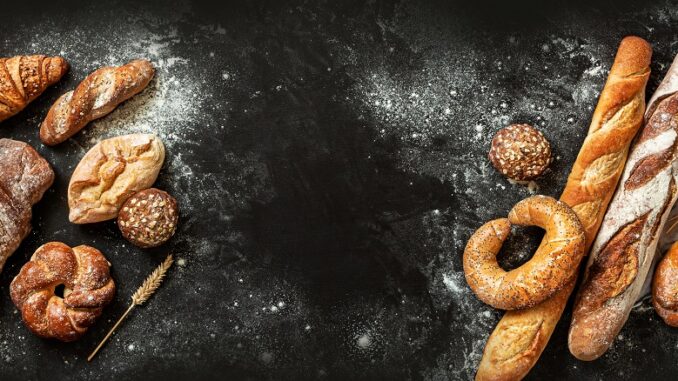
The growing desire for healthier bakery goods should benefit the frozen category, reports Jonathan Thomas.
Although many bakery goods are sold and consumed fresh, there is also a sizeable world market for frozen products. According to Research & Markets, global sales were worth USD11.5bn in 2025.
Annual growth within the market is forecast to average more than 6% in the period leading up to 2035, reaching a value of USD20.7bn. Much of this growth is expected to be driven by the extended shelf-life and hence convenience offered by frozen bakery goods, together with ongoing improvements in cold chain logistics in many parts of the world.
Frozen products are increasingly being viewed as an essential strategic component of the global market for bakery goods, as they help to deliver quality and reliability in the face of pressure to reduce food waste and escalating labour costs.
In 2025, North America accounted for over a quarter of global market value, while the fully baked products sector (comprising items such as bread, rolls and pastries) took a share of almost 60%. Much of the remainder of the market is made up of products such as pizza crusts, flatbreads and tortillas.
One growth sector of late has been the market for part-baked and ready-to-bake foods, which are frequently referred to as bake-off solutions. Penetration of these products is high within the in-store bakery (ISB) sector, as well as for foodservice operators such as coffee shops and quick-service restaurants (QSRs).
Bake-off solutions eliminate the need for preparing products from scratch using raw ingredients and allows companies to offer consumers a wider choice of freshly prepared bakery goods. The significance of the ISB sector can be illustrated by research carried out by Delifrance in 2024, which surveyed the opinions of 1,000 UK-based adults who regularly buy into the viennoiserie market.
This found that supermarket ISBs represented the most popular venue for purchasing pastries, used by 47% of respondents. This figure decreases to 42% for pre-packed pastries bought from supermarkets, 34% for independent or chain bakeries, 30% for cafes and coffee shops and 28% for convenience stores and/or petrol forecourts. Outside the UK, there is also evidence that ISBs are becoming an increasing popular distribution channel for the sale of sweet pastries and viennoiserie in European countries such as France.
Freezing Technologies
One of the key drivers in the global market for frozen bakery goods is the emergence and adoption of newer, more advanced freezing technologies. One of the most common methods used within the bakery industry is blast freezing, whereby high-performance equipment reduces temperatures rapidly by blowing intensely cold air across food surfaces.
This speeds up the freezing process considerably, preventing the formation of large ice crystals and protecting the texture, flavour and nutritional qualities of foods. In addition to offering shorter times, blast freezing is also considered both efficient and versatile, as well as allowing for efficient handling and storage of foods.
The global market for blast freezing technology was worth an estimated USD2.11bn in 2025 and is projected to increase by an annual average of more than 8% in the period leading up to 2030. Some of the most common types include individually quick frozen (IQF) tunnel freezers and air blast freezers.
Blast freezing is considered especially suitable for bakery goods such as pre-baked bread, bread rolls, pastries (e.g. croissants) and frozen dough. In the last instance, blast freezing dough before final proofing can help to maintain structure and minimise yeast degradation.
Spiral freezing technology has also increased its presence within the global bakery industry in recent years. This utilises a conveyor belt system upon which foods are gradually cooled as they move through a spiral-shaped freezing tunnel. The main appeal of this method is its continuous freezing process, which allows for the efficient processing of large volumes of products. This ensures uniform cooling, thereby reducing freezing time (and hence energy usage), as well as preserving product quality.
It is becoming widely used for bakery goods such as bread and pastries, as it can preserve freshness and texture. One of the leading suppliers of spiral freezers to the bakery industry is Starfrost, which is based in Suffolk in the UK. It specialises in industrial freezing and chilling equipment, exporting its products to more than 60 countries worldwide.
Its range includes IQF equipment as well as spiral freezers and chillers, applications for which include bakery goods, fruit, vegetables, meat and poultry, seafood and convenience foods. Previous customers within the bakery industry have included McVitie’s and the Greggs chain.
To read the entire article, please access your complimentary e-copy of Frozen Food Europe January-February, 2026 issue here.