

As in other branches, there are also issues in the catering industry, which have preoccupied companies for many years, and in fact with a clear growing complexity: efficiency and sustainability belong to these most important issues. How do manufacturers deal with them?
Kitchen professionals in food courts of large hypermarkets challenge the manufacturers of technical equipment for large-scale kitchens just like their colleagues in institutional catering, the hotel industry, or gastronomy. They all want to have to raise the productivity in their kitchens e. g. to produce more efficient, perhaps also more flexible than their competitors, or to compensate for staffing shortages. They choose different approaches for this: some would like to optimize their cooking processes, procedures, and costs, the others have to produce in small kitchens and that’s why they are looking for multi-functional compact units, which combine the main functions of boiling, roasting, deep-fat frying, or cooking at lower temperatures. The following is important for all pieces of equipment and units in a kitchen: they have to be able to be operated even by unskilled employees without a problem. Therefore, the manufacturers have to do a balancing act: their equipment has to cover a number of areas of use and at the same time be much easier to operate. That causes a great deal of pressure to innovate.
 The mastery of parallel cycles
In some cases, manufacturers develop comparable solutions in different areas, which become clear using the example of hot air ovens and blast chillers/shock freezers. The equipment in both areas has to be able to master different cooking and cold cycles parallel. An example: combi-cooking. In a hot air oven, different types of food can only be cooked parallel if each insertion slide-in can be activated with its own cooking program and the piece of equipment reports optically on its display and acoustically by a signal tone, when the food on the insertion slide-in has finished cooking. The manufacturers of equipment have put together food combinations, the so-called food basket, which can be cooked together.
Even with blast chillers and blast freezers, such processes run simultaneously without one cycle influencing another. Moreover, high capacity refrigeration units offer the possibility that the completely cooked food can be put in continuously even at a core temperature of 95° C without running processes being interrupted.
Sustainability – of growing importance
It is important for all pieces of equipment and units in a kitchen that they use the necessary resources (energy, water, cleaning chemicals) for their operation in the best possible way. Of course, that has primarily economic reasons, but also the awareness to handle very limited available resources carefully is unfolding step by step. But the endeavor to handle sustainably is still going on to some extent. Users, who attach importance to this subject, also inquire about, among other things, what energy sources his partner uses, whether he reprocesses his waste water himself or which upstream supplier he cooperates with. If the equipment doesn’t offer a clear product advantage, the kitchen professionals put much more weight on these features in their decision-making than in the past.
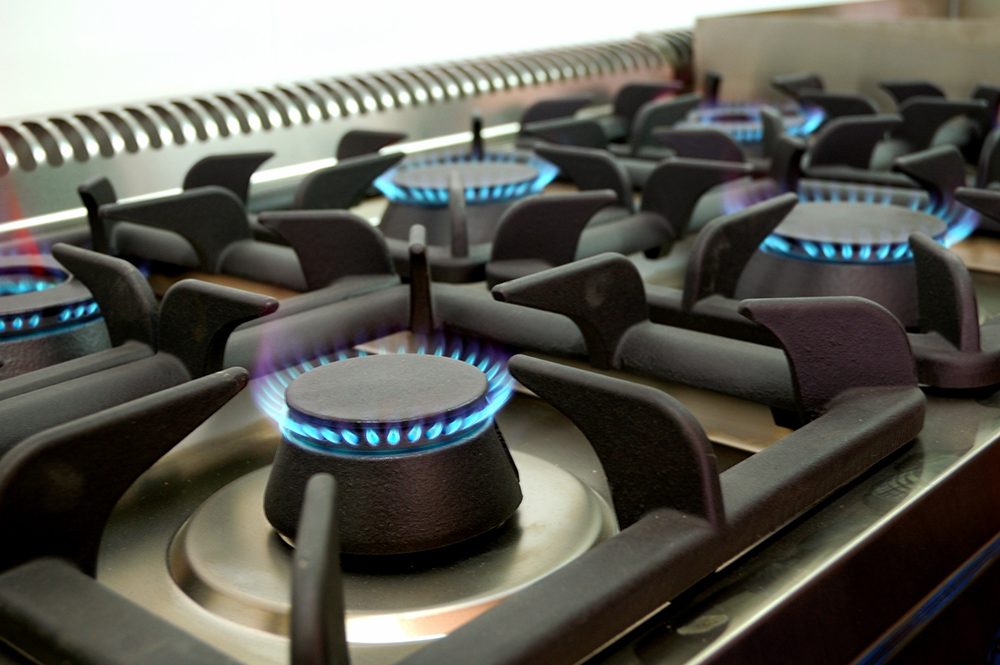 Hot air equipment – all-round experts
The development of combi-steamers from simple thermal equipment, which were only available in a few kitchens to extremely versatile, almost omnipresent cooking units in all sizes, is one of the most profound developments in the branch in the last two decades. In the start-up phase, the pioneer equipment merely provided heat, which was neither distributed evenly in the cooking chamber nor was constantly available during the entire cooking process. Today heat, humidity, time, dehumidification, the speed of the fans, and the air circulation as well as the cooling processes of the equipment are controlled very precisely electronically. That’s why cooks are also able to cook delicate food in them, juicy roasts, whose core temperature it controls to the exact degree, produce with crusty crusts, or offer baked goods, which become really crispy by means of the dynamic pause times. The manufacturers have stored extensive cooking programs for menu components or complete meals in the equipment ex works; the cooks are able to supplement their individual programs without a problem.
The communication between operator and device runs frequently by means of the touch screen, a technique that is known from smartphones. Self-explanatory visualizations on high-resolution color screens show pictures of ingredients and food, and in some cases videos of entire work-flows; all of this makes the operation of the device easier especially for semi-skilled employees.
In the air
There are also managers, who put the data of their devices into a cloud so that a kitchen chef can retrieve, inspect, and change the data from every place in the world. What appears to be playing around can be helpful if the kitchen chef, for instance, is responsible for several businesses in different places and would like to transfer cooking programs from one device to the others without a loss in time. Or: the central hygiene coordinator of a catering company can check the temperature profile and other hygienic parameters with a small expenditure of time.
Technical finesse treats resources with care
To save resources, especially energy and water, is also an important issue with hot air equipment. If the manufacturer heats the water for steaming with warm waste air and equips his devices additionally with heat exchangers, his customers can thereby save up to 16% energy and up to 42% water. A new generation of motors reduces the energy consumption by about 40%, which lowers the connected wattage by about 5%. Occasionally there is also the possibility, for instance, to retrieve the energy costs of a cooking process for a product cost analysis. Among many manufacturers, the cleaning program runs automatically without the operator coming in contact with the cleaning chemicals. Some manufacturers provide different programs for different degrees of contamination.
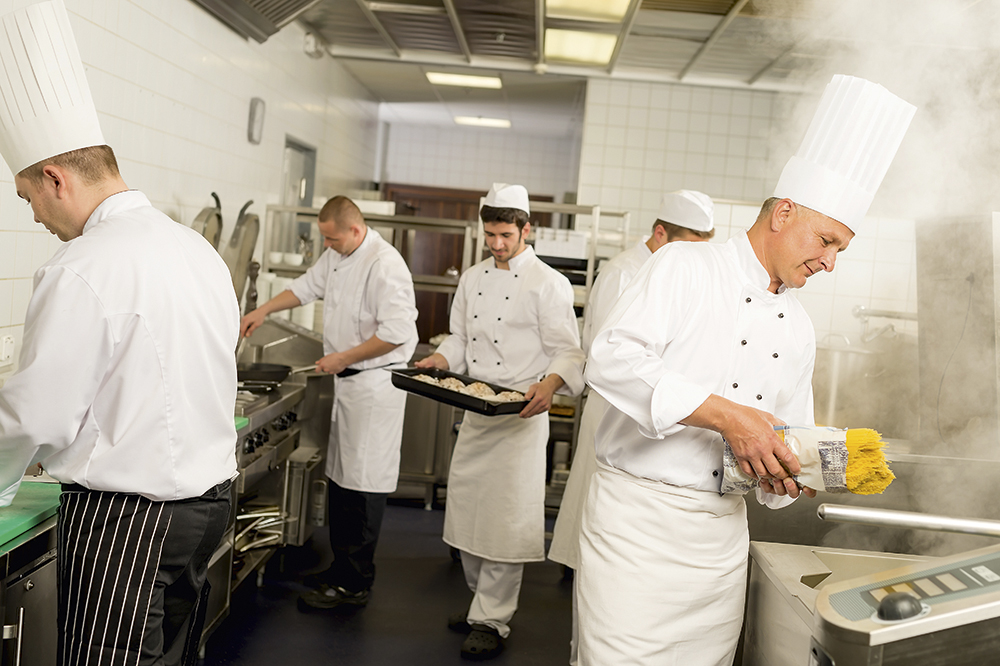 Blast chilling/freezing – with open or closed containers?
Some manufacturers of blast chillers and blast freezers require that the food may only be blast chilled or blast frozen when covered. Decisive for the question “coverage – yes or no?” is the temperature in the inner chamber of the device. If it remains at a reliable +° C, the food also keeps its moisture at its best without coverage. If on the other hand, it sinks below zero, then the containers have to be covered as otherwise too much moisture would escape from the food. Indeed, condense water then arises on the bottom side of the cover, which drops on the food and its surface is influenced negatively.
A second important factor is the hygiene in the cold chamber of the device. Some manufacturers equip them with hygiene systems like Sanigen, which keeps the air free from bacteria and the entire interior chamber air clean hygienically. Conclusion: If the kitchen professionals use equipment, which keeps the temperature continually above 0° C and is equipped with a hygiene system, then one can blast chill without a cover. In comparison to the processes with covered containers, they shorten the cooling time noticeably and keep the sensory quality of the chilled goods as best as possible.
Innovations in dishwashing
With innovations in dishwashing technology, one thinks primarily about equipment technology and systems engineering, which have changed drastically in recent years. The manufacturers reduced, for example, the use of all resources enormously, because their modern machines recognize, for instance, the loaded dishwasher conveyor belt and measures out water, cleaning agents resp. clear rinsing agents in the individual washing zones as needed. Furthermore, the dirt is removed from the dishwater and collected in strainers; the water is reprocessed. By the re-circulation of heat, they could lower the emission of warm air drastically, with the positive side effect that the ventilation system in the kitchen can frequently be downsized. But the manufacturers have also worked on their rinsing processes. One producer has developed a system to clean trays without additional required space parallel to the other wash ware. But as said, the units are not the only field of innovation in the area of “dishwashing”.
For good dishwashing results, the quality of water is one of the decisive influencing factors. Often fresh water is not only calciferous, but also contains other disturbing substances and particles, which prevent an optimal result with dishwashing. Large units have an integrated technology for water treatment (for example, reverse osmoses). With small ones, modules can be integrated optionally for the treatment of water. In any case, only the water for the unit is treated by such solutions but not the rest of what is needed in the kitchen. Then units have to be installed additionally, which treat all of the water of the operations needed. There are also compact, space-saving systems for this, which are able to filter up to 180 liters per hour.
 Innovative solutions for cleaning agents
A US American manufacturer of cleaning products for dishwashing units, who is firmly established in Europe, has been marketing for some time an innovative cleaning system consisting of a dispensing controller and up to five dispensers. These take concentrates in the form of blocks, which differentiate in their cleaning function, form, and color. The system offers professional cooks several advantages. Because of the different form, the cleaning agents can’t be put into the wrong containers any more. Thereby, the number of unnecessary repeated rinse cycles is lowered, which reduces the cost of dishwashing considerably according to the information of the manufacturer. The low weight of the new products have an effect not only on the transportation costs to the dealers and in the kitchens, but also on the dishwashing staff, who are relieved of heavy work, because they don’t have to carry heavy containers any more. Moreover, the volume of the packaging is reduced by 95% so that the kitchen professionals don’t have to have as much space for storage. The controller offers a wide-range of information about the dishwashing operations, points to errors with alert messages, and gives support on how it can be switched off. By a help button, the operators can, for instance, call up the so called “procedure videos”, which offer information and corrective actions. The controller also provides reports about rinse cycles, whose period of time the kitchen professionals can set individually so that the documentation is also ensured according to the HACCP. The manufacturer carries the costs of the installation of the system and recoups them by the sales of cleaning agents.