
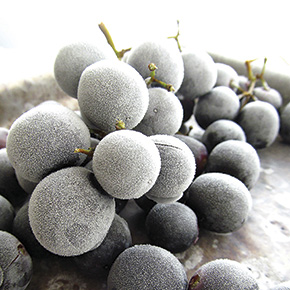
Fruit, vegetables and herbs have become one of the great success stories of the frozen food cabinet. Steady sales increases over the last five years or more and the fact they have steered clear of the horsemeat scandals in the recent past indicates they have succeeded in capitalizing on their “healthy” image.
The vegetable companies that have invested in marketing the ‘frozen fresh’ concept over the last number of years are receiving dividends today. In advance of the 29th Annual Alltech International Symposium in to be held in May, Laci Poulter, global consumer marketing manager for Alltech and chairperson of The Marketing Forum has stated: “Today’s consumers don’t want – they demand – exceptional experiences with the brands they trust. We must invite our consumers to have those positive experiences, and eventually long-term relationships, with our brands.”
UK and Ireland
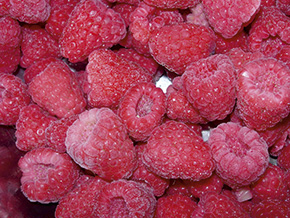 Branding and marketing seem to have paid off, as sales of frozen vegetables have increased over a number of years. Fruit and herbs have entered the market more recently but sales are growing. “There was value growth in the market for the last 25 quarters on Kantar Worldpanel on an annual basis. So for over six years now we’ve seen growth,” said Brian Young director-general British Frozen Food Federation (UK), who explained that volume growth was also strong. The wet summers in the recent past did constrict supply a little. “It is hard to get any volume growth in the food industry, but for 22 quarters, or five and a half years, there was consistent volume growth.” Kantar Worldpanel retail frozen food statistics (year on year to 25th November 2012) show that frozen vegetable sales grew from £435.6 million in 2011 to £464.6 million in 2012 – a 6.7% growth year on year. In value terms the category grew from 298.1 million kgs in 2011 to 306.2kgs in 2012 – a 2.7% increase year on year. Whilst Brian Young was speaking of the UK retail market, statistics for Ireland also show that sales of frozen vegetables, fruit and herbs are growing. Bord Bia (Irish Food Board) reports that the perception amongst consumers of frozen processed food in general is it is of lesser quality than fresh. This is especially true of frozen processed red meat and chicken products, however frozen processed vegetables are the exception and considered of a comparable quality to fresh, and slightly more desirable in terms of nutritional value than canned/preserved products. Frozen processed food has benefited from the global economic downturn, because of factors such as price, longer shelf-life and the opportunity to buy frozen products, when offered at discounted prices for use at a later date. A forecast report on the Irish market beginning in 2011 states that frozen vegetables are an essential shopping basket item for many Irish consumers. Frozen peas were the most popular in percentage terms, with a 26% value share of the frozen vegetable category for 2011. Most parents of young children keep at least one bag of frozen peas in their freezer at all times, as a convenient addition to a meal without any significant expense. Frozen vegetable mix, with a 25% value share in 2011, is popular for similar reasons, and is also a popular private label purchase, given the comparable quality to branded equivalents. Frozen green beans and frozen carrots, with value shares of 13% and 12% respectively in 2011, provide a quick and convenient option for consumers who wish to prepare meals at home but do not have the time or inclination to spend on preparing vegetables. Less popular, mainly due to the ease of preparation from fresh, frozen broccoli and frozen cauliflower with 9% and 4% shares respectively in 2011. Bord Bia forecasts growth in sales of frozen vegetables in volume terms every year, for six years from 2011, when 17,270.5 tons were sold, to 2016 when it is forecast that sales will be 19,583.9 tons. In value terms, sales are forecast to increase from EUR52.2 million in 2011 to EUR62.3 million in 2016.
Healthy value
The growth in sales has come from two directions, according to Brian Young British Frozen Food Federation (BFFF) the demand for healthy food and the requirement to have value for money. “First of all, consumers’ budgets are still squeezed and consumers are looking for great value. Then the processing of food saying ‘straight from the field’ ensures that you get absolutely the most economic and efficient supply chain. You get great value from frozen vegetables. You get absolutely locked in goodness and there is much scientific research which gives evidence to that,” said Brian Young. In fact, at the time of going to print, BFFF was expecting a research publication by Leatherhead Food Research which shows that retained anti-oxidants for fruit and vegetables in the frozen form is superior to that in either fresh or canned form. Yet more detailed research to be completed by a Chelsea university later this year is also expected to prove the benefits of frozen foods. Research already available shows that after 3 days up to 70% of Vitamin C is lost in ‘fresh’ vegetables. So buying and storing frozen vegetables and fruit, is seen as a healthy option with less wastage. “Consumers get the message of the benefits of frozen fruit and vegetables. It is a story that resonates quiet readily and I think that is partly because of the success of the advertising campaigns of companies like Birds Eye,” he said “People have got the message that the food is frozen within two hours of leaving the field.”
Western Europe
Bord Bia forecasts for the frozen food market in Western Europe estimate it will be worth $63,583.7m in 2014, with an expected CAGR of 3.4% between 2009 and 2014. In volume terms, the frozen food market in Western Europe will grow at a CAGR of 2.1% between 2009 and to total 9,123.4 million kg in 2014. The frozen vegetables category was valued at over $5,000m in 2009 and, by the end of 2014, the frozen vegetables sector will be worth approximately $6,200m, with an expected CAGR of 4% between 2009 and 2014. The frozen vegetables market volume totaled 1,500 million kg in 2009, and by the end of 2014, the frozen vegetables market will total over 1,800 million kg, with an expected CAGR of 2.6% between 2009 and 2014. The forecast expenditure per capita in value terms goes from $10.6 in 2009 to $12.7 in 2014. The forecast consumption per capita (kg), goes from 3.3kg in 2009 to 3.7kg in 2014. In value terms, forecasts for the frozen fruit market in Western Europe put growth at a CAGR of 3.7% between 2009 and 2014, to reach a value of $709.4m in 2014. In volume, the frozen fruit market in Western Europe is forecast to grow at a CAGR of 2.7% between 2009 and 2014, to total 135.4 million kg in 2014.
Eastern Europe
Bord Bia forecasts state that in Eastern Europe the frozen vegetables category was valued at $541m in 2009, and by the end of 2014, the frozen vegetables category will be worth $673m, with an expected CAGR of 4.5% between 2009 and 2014. The frozen vegetables market volume totaled 221.5 million kg in 2009, and by the end of 2014, the frozen vegetables market will total 240.3 million kg, with an expected annual growth rate of 1.6% between 2009 and 2014. The frozen fruit category was valued at $270.8m in 2009, and by the end of 2014, the frozen fruit category will be worth $342.7m, with an expected CAGR of 4.8% between 2009 and 2014. The frozen fruit market volume totaled 73.6 million kg in 2009, and by the end of 2014, the frozen fruit market will total 87.5 million kg, with an expected CAGR of 3.5% between 2009 and 2014.
What’s new?
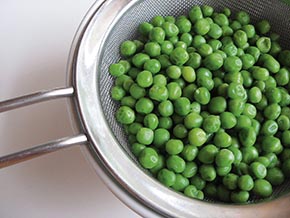 Packaging is increasingly important in frozen food sector across Europe. Mintel researchers highlight the greater demand from consumers for ease of opening and closing of packaging. Re-sealable bags with zipped and other closings are particularly popular for portioned products and frozen fruit and vegetables. The consumer wants to remove one or two portions of fruit or vegetables and put the packet back into the freezer, thus reducing waste. New packaging formats are a way to draw the consumers’ attention to the category. Boxes are the leading choice of packaging for frozen food internationally and many fruit and vegetable products are now in see-through boxes, with a cardboard sleeve, which can be slipped off, so the consumer can see the actual fruit or vegetables. Bags and pouches have been growing in popularity in the US market, where they are the fastest growing pack-type at the expense of boxes and even bags. Self-venting pouches are particularly popular, especially for vegetables which it is claimed have improved taste and texture. In such pouches, the vegetables steam within the packet and retain all their own juices and nutrients. They are usually cooked in the microwave oven. Another area of innovation is in frozen herbs and spices. Retailers such as Waitrose offer them in mixes of frozen ingredients, such as a rice and vegetable dish with Thai herbs and spices or in a pouch. The Waitrose Ingredients range includes pouches of frozen herbs and spices with everything from crushed lime leaves and lemon grass sticks to the more everyday herbs like coriander, mint, parsley and ginger. Brian Young, BFFF, explained that the concept of ‘fresh frozen’ herbs is outshining the old stalwart –the dried herb. Easy to use cube portions and free flow packets in the frozen cabinet are an attractive alternative and even considered a premium product. “In the old days, you might have had the herb and spice rack, with dried herbs but they do actually loose their flavor. Whereas as frozen they don’t and they are incredibly convenient as well,” said Brian Young. ”You just have to look at supermarket shelves and see that frozen herbs is a fantastic success story. But it will always be a smaller market and will always be more niche and more premium.” One innovative company in the market is Daregal. This company has added to its fresh frozen herbs range with a frozen Infusion range, which offers the consumer, for the first time, a hot drink, with the fresh taste of the herb. Quick frozen herbs lose none of their intensity, so that the full freshness can be experienced when hot water is added to the frozen infusion. Either Mint, Lemon Thyme or Thai Basil can be enjoyed providing a refreshing drink to the tea connoisseur. Daregal states that the infusion is placed in finely perforated pouches and comes in frozen form to preserve the taste and it appeals to consumers because of the intense flavor, provided by the 100 per cent-natural herbs.