

Convenience is an increasingly important key driver in the European food industry. Even in more traditional European markets, culinary traditions are slowly evolving in favor of convenience foods. Consumers are leading increasingly busy lifestyles, with longer working hours and are therefore time-pressed, driving interest in quick meal solutions.
Source: Mintel
This is especially the case during the working week. For example, according to Mintel’s research around four in 10 French, German and Polish consumers now claim to choose easy, quick-to-prepare food for weekday evening meals. Younger consumers especially are embracing value-added product formats such as ready-to-cook and ready-to-eat meals. Growth in single-person households in most European countries is also driving demand for easy-to-prepare products requiring little preparation time.
In France, for example, despite a rich culinary heritage, two-thirds of consumers now claim to look for easy-to-prepare products when purchasing meat and poultry products, rising to 70% of 25-34 year olds. Usage of breaded, battered, marinated, glazed and seasoned meat, poultry and seafood is already relatively high in France, with consumers more likely than their European counterparts to eat these types of convenience products.
 Frozen convenience food needs to step up
Interestingly, despite the strength of the chilled convenience segment in markets like the UK, and its fast growth in many other European markets such as France and Germany, it is frozen food launches that are more likely to make on-pack claims around convenience. According to Mintel’s Global New Products Database, a significant 30% of all frozen food launches in Europe, for the year ending September 2014, made a convenience claim on pack (such as microwaveability, ease of use, portionability, on-the-go use, a time/speed benefit, or a convenient packaging claim). That compares to 22% in chilled food and 15% in ambient food, although in all cases the share has been rising in recent years reflecting the increasing importance of convenience across the board.
Furthermore, it is evident that in traditionally frozen convenience dominated markets such as Germany, the move to chilled convenience is well under-way suggesting that frozen foods need to work harder to convey their convenience attributes. Although Germans still do not buy the same amount of chilled prepared meals as their European neighbors, the number of regular consumers is steadily growing. Mintel research shows that every third (34%) German ready meal consumer had a chilled ready meal on the table at least once a week in 2013, which was seven percentage points more than in 2012.
 Frozen foods rely most on convenience
Of all frozen food products, based on launches in the last three years, it is meals/meal centers, processed fish/meat and fruit/vegetables especially that rely most on convenience. The importance of convenience in the frozen ready meals market is unsurprising given the time-saving focus of such products. Around eight in 10 consumers across Europe consider prepared meals a good option when too busy to cook from scratch. Furthermore, around seven in 10 believe they are a good option when eating alone, reflecting in part the importance of the growth in single-person households to the market. Significant numbers also believe they are a good way to try a new cuisine suggesting that focusing on diversification in ethnic recipes could be a way to engage with consumers.
Furthermore, frozen prepared meals are doing a relatively good job in competing against chilled meals on health grounds. Only 15% of German consumers (rising to a high of 33% in Spain when looking across the major continental European markets) believe frozen prepared meals are not as healthy as chilled prepared meals. Behind convenience, some health claims (principally no additive/preservative claims and low fat or calorie claims) also feature relatively highly in European frozen prepared meal launch activity. However, there is clearly more that can be done to enhance the health image of frozen prepared meals. As many as seven in 10 consumers in France, Italy and Spain say it is important to them that prepared meal dishes are made from healthy ingredients (e.g. wholegrain rice, one of 5-a-day).
One missed opportunity in particular appears to be in meals that promote added value health benefits. Few frozen food brands emphasize both convenience and added health benefits such as being high in fiber or protein. Quorn’s range of vegetarian frozen food products is one example that does, with much of the brand’s portfolio emphasizing the high protein, high fiber and low-fat components of its main ingredient, mycoprotein. Few brands also incorporate functional health benefits, with those that do mainly being related to slimming claims, such as Weight Watchers and private label ranges such as Tesco’s Healthy Living frozen meals in the UK. There may be more potential for overtly functional health ranges that focus on major health improvement areas such as digestive health, heart health or bone health.
In processed fish and meat, convenience is increasingly being tied to variety. Ready-to-cook and ready-to-eat frozen poultry innovation marrying convenience with flavour experimentation for example is very much on target with many European consumers. Take France, where meat, poultry and seafood consumers are open to interesting flavours and unusual ingredients. In fact, more than four in 10 (43%) French consumers seek out products that feature such culinary enhancements, with younger consumers aged 16-34 more likely to seek out these attributes than older consumers.
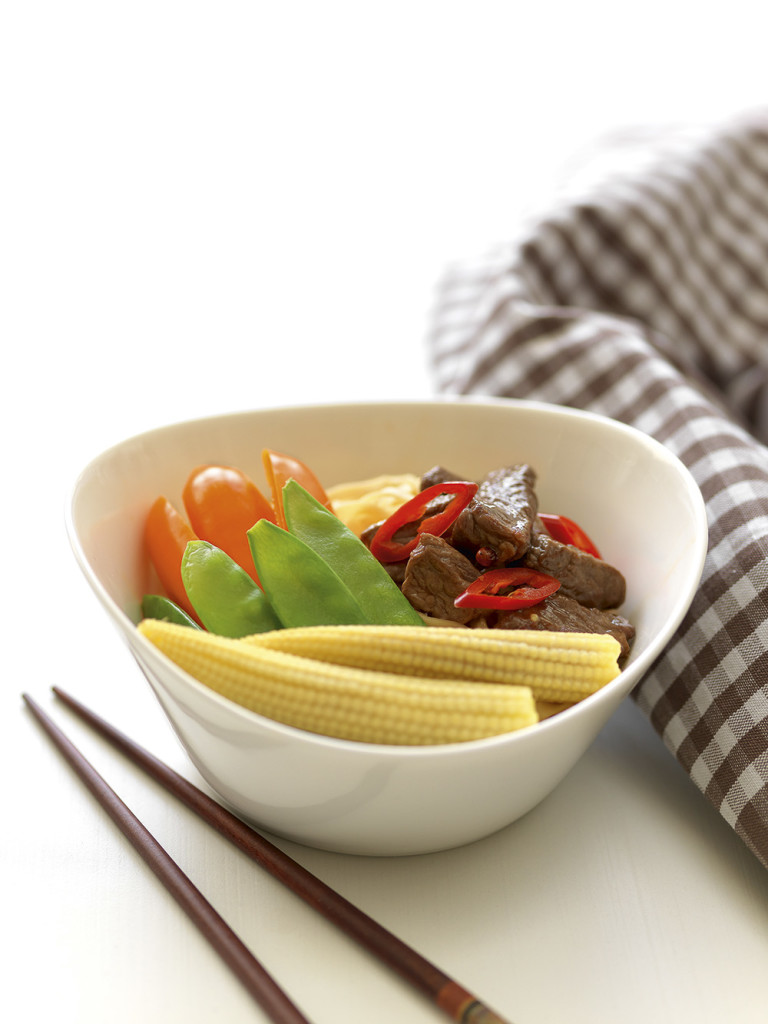 And, ethnic-inspired pre-cooked or ready-to-cook frozen poultry options are a solid opportunity for future innovation and development in France. Recent frozen poultry product introductions by Glaces Thiriet, for example, reflect a wide range of traditional, yet sophisticated flavors, from Duck with Porcini Mushrooms and Armagnac Sauce to Chicken and Forestière Sauce with Hazelnut and Pistachio, while new products from CPF (Charoen Pokphand Foods, Thailand) and KQF (Khan Quality Foods, UK) provide examples of the use of Asian and Indian marinade and spice profiles that are beginning to appear in the segment, mirroring chilled offerings.
Convenience is clearly also frequently used by frozen vegetable producers to increase the relevance of their products to consumers, a large proportion of whom (almost seven in 10 in Spain for example) say convenience plays a key role in their choice of vegetables. In response, many new frozen vegetables or vegetable mixes appearing on the market are suitable for microwave cooking, with some products featuring packaging that can go straight from the freezer to the microwave.
Savvy shopping is still in evidence
Across the frozen convenience food category in Europe, private label is having a bigger impact. In terms of launch activity, for example, more private label products have been coming to the market in recent years than previously. The private label share of new frozen food products with a convenience claim, launched in the 12 months to September 2014, rose to 49% with the trend suggesting that in the next 12 months private label will continue in the ascendancy.
Consumers, still feeling the effects of the recession, are continuing to seek value in their weekly shop, especially in hard-hit markets such as Spain where almost four in 10 say they have switched from branded to cheaper own-label groceries. The gains being made by discounters, such as Aldi and Lidl, across Europe is also reflective of consumers seeking out better value.
In the large German frozen food market, the growing influence of private label can be seen clearly in the previously brand dominated frozen pizza market. Frozen pizza is a staple in the majority of German households, accounting for total sales of EUR1.13bn in 2013. Given its high convenience factor, pizza has become the German consumers’ favorite type of prepared meal, accounting for over 55% of the total prepared meal market volume in 2013. Dr.Oetker and Nestlé subsidiary Wagner remain the branded market leaders, both enjoying a very strong brand loyalty amongst German pizza fans. In 2013, two-thirds of German consumers purchased either Dr.Oetker or Wagner products for consumption at home. However, there are some indications that the high price sensitivity of German shoppers and a rapidly expanding private label offering are taking their toll on brand loyalty, exposing branded pizza manufacturers to the fierce competition from retailers’ private label products.
 Indeed, in 2013 Mintel’s consumer research showed that nearly 40% of German consumers were buying own-brand pizzas, with every fifth buyer swapping a branded product with private label to save money. Moreover, for over a half of German users, price is a key factor when purchasing pizza. This suggests a growing pressure on retailers and manufacturers to satisfy increasingly price-conscious German consumers.
Sensing a shift in consumer preferences towards private label, German retailers have been relentless in their launch of new frozen pizzas, with private label leading the way in terms of innovation in the segment. In 2013, private label accounted for nearly 70% of all new frozen pizza launches in Germany, compared to only 35% in 2011. Accounting for just one third of overall revenues, private label frozen pizza is available from all major German retailers and covers all price tiers, from value to premium. Growing demand for higher quality toppings in Germany, together with very low current pizza prices, suggests that there is a lot of scope to develop a more premium or even super-premium tier in the frozen segment. It remains to be seen whether the initiative will be seized by branded manufacturers or by private label.
Branded players though certainly need to respond with added value claims to improve differentiation in an increasingly crowded market. Brands should be looking to identify new opportunities (e.g. new consumer segments or usage occasions) which can be explored to create added value and thus, a point of difference.
Such points of difference could include promoting quality through naturalness; the use of natural ingredients being very important to Germans when it comes to selecting frozen pizza. Along with an emerging consumer health awareness, consumers do not want unknown ingredients in their food, which is reflected in the popularity of ‘no additive/preservatives’ claims on product launches. All Wagner pizzas, for example, come with a prominent front-of-pack label highlighting a 100% natural taste and a guarantee that all products are free from flavor enhancers. Organic quality plays a less important role in the mainstream frozen pizza market, with only around one in 10 new product launches in the past 12 months carrying an ‘organic’ claim. Dr. Oetker has failed to extend the reach of its organic pizza ‘Ristorante Biologica’ beyond one supermarket chain and Wagner’s organic pizza is sold solely in specialised organic stores in Germany. However, the recent success of organic pizza range ‘Followfish’ from German frozen fish processor Fish & More suggests that there is some potential for successful positioning of organic frozen pizzas in the German mass market, especially in conjunction with other claims around ethical and sustainable practices.
For branded frozen convenience food players across Europe to enjoy the spoils of rising demand for quick meal solutions, they must find such solutions to provide a reason to buy against the threat of private label in their own sector, let alone combat the significant rise of chilled convenience solutions across Europe.
For more information, go to
http://foodanddrink.mintel.com