
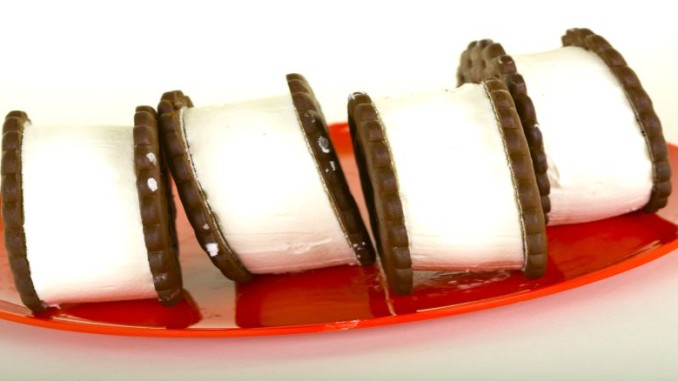
In 2016, ice cream sandwiches suddenly received a new lease on life, thanks to some imaginative – and hugely indulgent – new approaches to innovation, according to Mintel.
“Gourmet ice cream sandwich parlors and food stalls have been emerging in New York, London and Chicago over the past two years, sowing the seeds of a trend which has finally hit mainstream retail. Part of the appeal of ice cream sandwiches is in the presentation, with the cookie or cake parts contrasting with the ice cream center. This kind of visual appeal is important in this time of social media sharing, as discussed in one of Mintel’s 2016 Global Food & Drink Trends, Good Enough to Tweet,” Mintel says.
Multinational food companies have been taking an imaginative approach to the format. For example, Krispy Kreme in Japan introduced Kool Krispy Sandwich in April 2016, comprising two scoops of vanilla and raspberry ice cream in between two halves of an Original Glazed Donut. The global popularity of the Krispy Kreme chain ensured that this super indulgent launch featured in news sites all around the world, and a strong contender for a wider roll-out.
In the US, Pop Tarts partnered with restaurant chain Friendly’s in April 2016 to launch its own version of an ice cream sandwich, featuring a Pop Tart either side of the ice cream and toppings like chocolate-covered peanuts.
Meanwhile in Europe, the arrival of Ben & Jerry’s new vegan ice creams has somewhat overshadowed the launch of the Unilever brand’s sandwich range in March 2016. The soft cookie sandwiches are available in a single Cookie Dough ‘Wich pack, and also a sharing format containing eight bite-sized cookie sandwiches. Ben & Jerry’s entry into sandwiches showcases how ice cream sandwiches have been adapted to be a premium ice cream product, rather than a kids’ option, which is how they have traditionally been marketed.
Taking Cues from Biscuit Innovation
Ice cream manufacturers can take inspiration from innovation trends in the biscuit and cookie market to maintain an exciting pace of innovation in ice cream sandwiches. Extending the fish shaped style from South Korea, highlighted above, ice cream brands can look at how biscuit companies design biscuits with different shapes to appeal to different age groups, Mintel says. For example in Japan, the national phenomenon that is ‘kawaii’ culture – which translates as ‘cute culture’ – has encouraged a variety of panda-, koala- and teddy bear-shaped biscuits.
“Where ice cream brands can really learn from biscuit makers is in targeting older consumers with shaped biscuits. Teenagers and young adults may be considered as more difficult to target than children, but German brand Hans Freitag is known for its imaginative approach to more thoughtfully considered, on-trend shaped biscuits. For example, its Likies biscuits are in the shape of a Facebook thumb’s up ‘like’ symbol, well positioned to appeal to social media users. Finnish biscuit company Fazer retails Moomin-shaped biscuits, which will appeal to older Millennials in Europe who grew up with the animation series and books. This kind of innovation in the biscuit category demonstrates how ice cream sandwiches can do so much more with the shape of their products,” according to Mintel.


