

Last month, the 32nd edition of Anuga ended with excellent results. For five days, around 155,000 trade visitors from 187 countries ensured there was lots of activity at the stands of the 6,777 exhibitors. To offer information about the organizational efforts, as well as some viewpoints on the food industry and its trends, Mr Dietmar Eiden, vice president of Trade Fair Management Koelnmesse GmbH sat down with Dan Orehov, chief editor of Frozen Food Europe, for an exclusive interview about the event.
How do you characterize the evolution of Anuga, from its first edition up to 2013?
 Anuga is a huge success story – it was initialized in 1919 to help the German food producers trading their goods and was reinstated in 1951 – in Cologne – with the same goal after World War II. Over the past 60 years Anuga became not only the world’s largest but also the most important trade fair for food & beverages and plays a major role for trendsetting and for the international food business.
What are the main challenges you were faced with this year and how did you manage to overcome them?
The main challenge at Anuga is put together an international and high level food show that attracts buyers and leading decision makers. This year we implemented new topics as the special show OliveOil Market and were very satisfied with the results. Also our decision to initiate a certification proof for organic products turned out to be a very successful measure we took at the right moment in time. Last but not least we introduced “fair trade products” to the world food business – a topic that added excellently to our general theme of sustainability.
What does the event entail in terms of manpower and organization?
What does the preparation for the event actually mean and how is it managed? (please refer to your team and to the organizational process) We start working on the show as soon as the actual show finishes. The core team comprises seven people, plus colleagues from the press and advertisement department, from the event management and others. Getting nearer to the event means to involve more and more people to make things like the hall layout, the parking grounds and the ticketing work. In the end about 200 people are involved.
What are the most important trends and changes in the food and drinks sector, observed throughout this year’s edition of Anuga?
How about with regard to frozen food? In general, consumers are demonstrating an increased willingness to pay more for high-quality food. And the primary characteristic of food quality is flavour. But trust in the product and its producer also plays an important role. Consequently, transparency and sustainability are crucial themes for the food industry. The market potential for organic and fair trade products as well as regionally produced food is growing. Fast-paced and individualized lifestyles are driving the trend toward convenience products and also toward eating out more often. All of these trends in food are addressed at Anuga as well as the challenges the international food and beverages has to face in the future. And all of these trends are also palpable in the frozen food sector.
How has the frozen food segment evolved at Anuga, in terms of exhibition space, number of companies present and overall interest in this field?
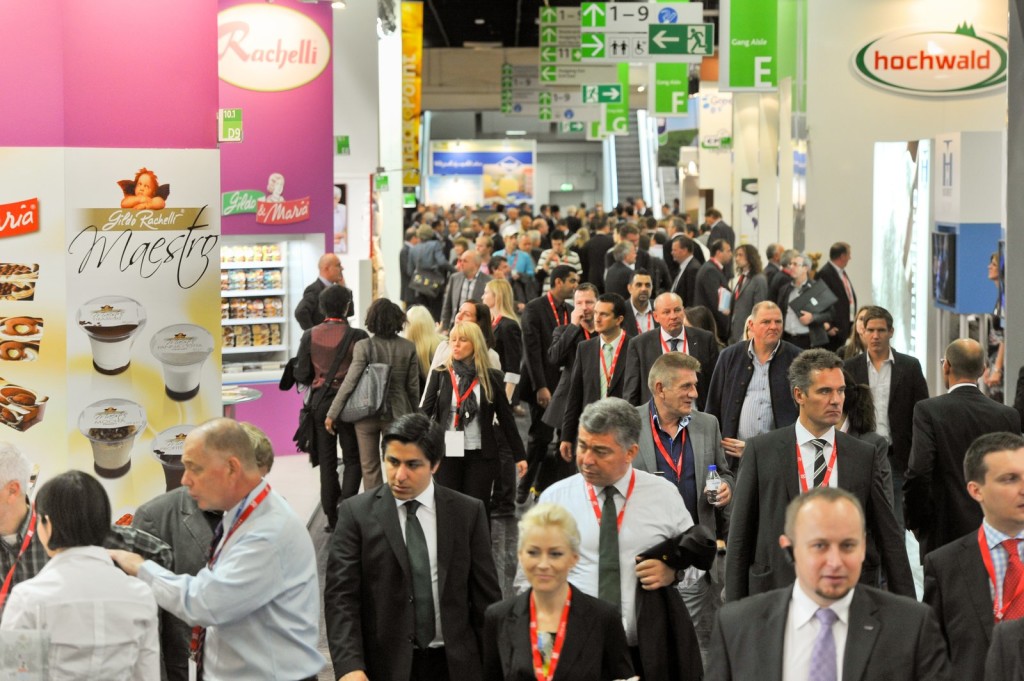 The segment developed very well over the years. This year we were happy to welcome a record of 507 companies in the frozen food halls. We also staged a very successful evening event called “Frozen Food” as a networking platform for the frozen food business.
What product categories have significantly expanded their presence this year, compared to 2011 and how do you comment on this trend?
Actually Anuga Meat was one of the biggest trade shows at Anuga.. In fact it is the world’s largest and most comprehensive information and ordering platform for meat, sausage, game and poultry. Anuga Meat occupied Halls 5, 6 and 9 of Koelnmesse; that added up to a gross exhibition space of around 50,000 m². This year the demand for exhibition space at the trade show was once again very high — just as it was in 2009 and 2011. Also Anuga Dairy was excellently booked: approx.350 suppliers on an exhibition space of 23,500 m².
Which are the main retail technologies trends for the future highlighted at RetailTec?
The most important trend for the retailers to observe will be the integration of food service elements into their shops. New concepts were widely discussed at Anuga. Apart from this there is the trend to act in a sustainable, energy saving way throughout the year and to communicated these activities towards the public.
What countries have a strong presence at the fair in terms of exhibition space rented, innovative products displayed and overall number of delegates?

The largest contingents came from Italy (1,043 exhibitors), Spain (447), the People’s Republic of China (409), France (255), Turkey (239), Greece (221), the Netherlands (212), Belgium (189), the USA (189) and Thailand (161). Large contingents came also from Poland, the UK, Austria, Argentina, Brazil, Denmark and Canada. This year there were slight increases in the country participations for Turkey, Poland and the USA. Anuga does not focus on special countries and regions. Anuga is a truly international show that is open to any company and buyer.
How many of the visitors are representatives of retail chains, for example buyers etc. Percentagewise, what is the structure of visitors-exhibitors and their respective business functions?
Buyers from the retail form the largest visitor group at Anuga (ca. 55 percent). The rest is food service (catering, hospitality etc) and industry buyers who are also very important for the producers, especially in the frozen food sector. Over 75 percent of the visitors are high ranked buyers (we know this from our regular interviews).
Please comment on the current economic environment in Europe and in Germany in particular. Also, please share your thoughts with regards to the evolution of the food sector in the short-to-mid term, taking the economic context into account.
Producers from Southern European countries (Greece, Italy, Spain) were very active at Anuga 2013. Export is the key word to overcome the consumer crisis in many countries. Of course Germany did well in recent years but so did countries like Denmark, Sweden, the Netherlands, Great Britain; Poland. A food producer should always look to build his success on his home market and on his export activity as well as to deliver his good to the retail as well as the food service: This makes him independent in times of crisis.
What sets Anuga apart from other trade fair events? What do you believe are the key attributes that help it maintain the leader position among similar trade fairs in Europe and elsewhere?
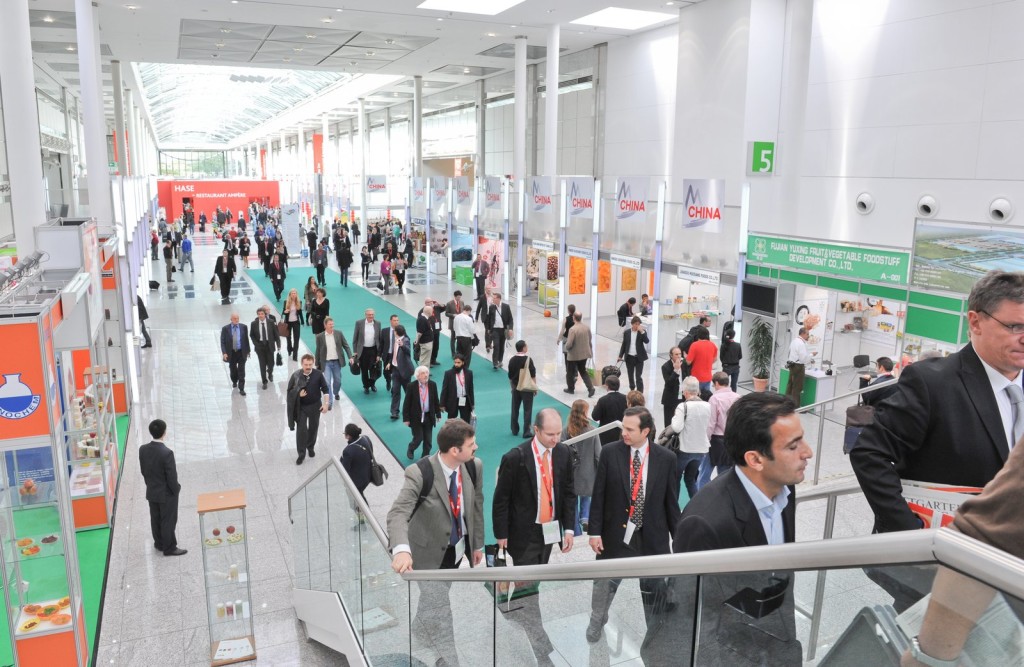 We work hard to offer a unique concept, an organization that makes life easier for exhibitors as well as for visitors and an international trading platform for the whole business.
What is the feedback you received throughout the years, with regards to the impact of Anuga on exhibitors and visitors, in terms of business contacts, networking and other valuable business opportunities?
This year’s Anuga was excellently booked and had a fantastic response from buyers: Around 155,000 trade visitors were registered. This speaks for itself I guess.