Whoever would have thought it? What was once a staple basic Italian food, has today become a family meal, and kids’ favorite, for consumers across the world.
By Verite Reily Collins
But pasta, in all its many forms, is now eaten by millions every day. And children, normally fussy eaters, generally love it. Italy of course still leads the way, but Mamma’s home-made pasta is slowly giving way to ready-made pastas bought by working mums. In Britain families have latched onto the pasta habit, and Market research company Statista reports that in 2014 (latest year for which figures are available), chilled or frozen pasta was the third most popular ready-bought meal in the United Kingdom (UK), after British and Indian food with an estimated 8.6 million people used chilled or frozen pasta ready meals in the UK. And not only is pasta a staple for meals in the home, but Italian restaurants serving pasta, are very popular for meals out. Even though Britain’s Daily Mail reported that much of the pasta served in High Street restaurants comes ready-made, rather than as in the old days when it was Mamma’s home-made pasta that was served.
 It wasn’t always so
In the 1960 the British started to go abroad – and discovered Italian cooking. Pasta was considered an exotic food, and smart dinner tables showed off with ‘exotic-sounding’ dishes (to the post-war diners) such as spaghetti Bolognese or Lasagne. Once these became a staple of the repertoire, it wasn’t long before children wanted their share – and now pasta is part of just about every kid’s menu, wherever they live.
One essential ingredient in a pasta dish is some kind of sauce – it might be a simple carbonara, classic tomato or a thick meaty Bolognese. Whatever is required, most companies now make frozen sauces which easily heat up to provide the finishing touch to a classic dish, either served at home or in a restaurant. The giant Surgital company supplies these sauces in kilo-large packs of easy-to-heat oblongs, and they come in most popular flavors including carbonara, Bolognese, tomato with basil etc.
The giant company Surgital say “the consumer is becoming more and more aware and responsible when it comes to purchasing and consuming food. This trend is affecting large groups, which are looking for the right answers from the food service sector.” Attention to organic products or products from crops without chemical treatments and without genetic manipulation at all stages of production, from processing to completion, is a worldwide growing phenomenon. This widespread attention stems from the awareness that health and well-being are strictly connected to food and that the preservation of the planet requires respect for nature and biodiversity; and furthermore, that human health and the environment are inextricably linked. Interestingly, to add to the flavor of their cheese sauces, Surgital includes the Dutch Edam cheese in amongst their Italian cheese ingredients.
Roscilli
Supplying to Carrefour, Auchan, DeSpar and other major outlets, Roscilli’s Private Label range includes the Tuologo pack from 150 grams to 1 kilo, which feature whole porcini mushrooms, diced and sliced, to Chiodini. Champignon, and 12 other varieties, including artichokes. Asparagus, bacon, and shrimp with zucchini or broccoli and bacon, and with pumpkin, with grilled vegetables, with seafood, the black truffle, asparagus, fruits and wild strawberries.
Findus
In Britain, Findus is a brand of many firsts: from Crispy Pancakes in the late 60’s, through the first frozen Lasagne in the early 70’s and French bread pizza in the late 70’s. In the frozen pasta range it has a range of pasta dishes in a multiple-portion, resealable bag format. The range offers classic Italian recipes: Fusilli Bolognaise, Penne Carbonara and Penne and Meatballs in a tomato sauce.
Pasta-to-go
Today, when just about everyone carries around a paper cup containing food or drink, Pasta Pronto has come along with an addition to the carry-on accessory. Pasta Pronto is a complete concept allowing outlets to run an in-house ‘pasta-to-go’ operation; they say you can “realize profit margins in excess of 60% (based on recommended selling prices)”, and saying their product range means you can serve a selection of truly authentic Italian pasta and a huge variety of chilled and ambient sauces. Everything is included from the equipment, pasta and sauces down to the Pasta Pronto cup, lids and forks.
 ‘Designer’ pasta
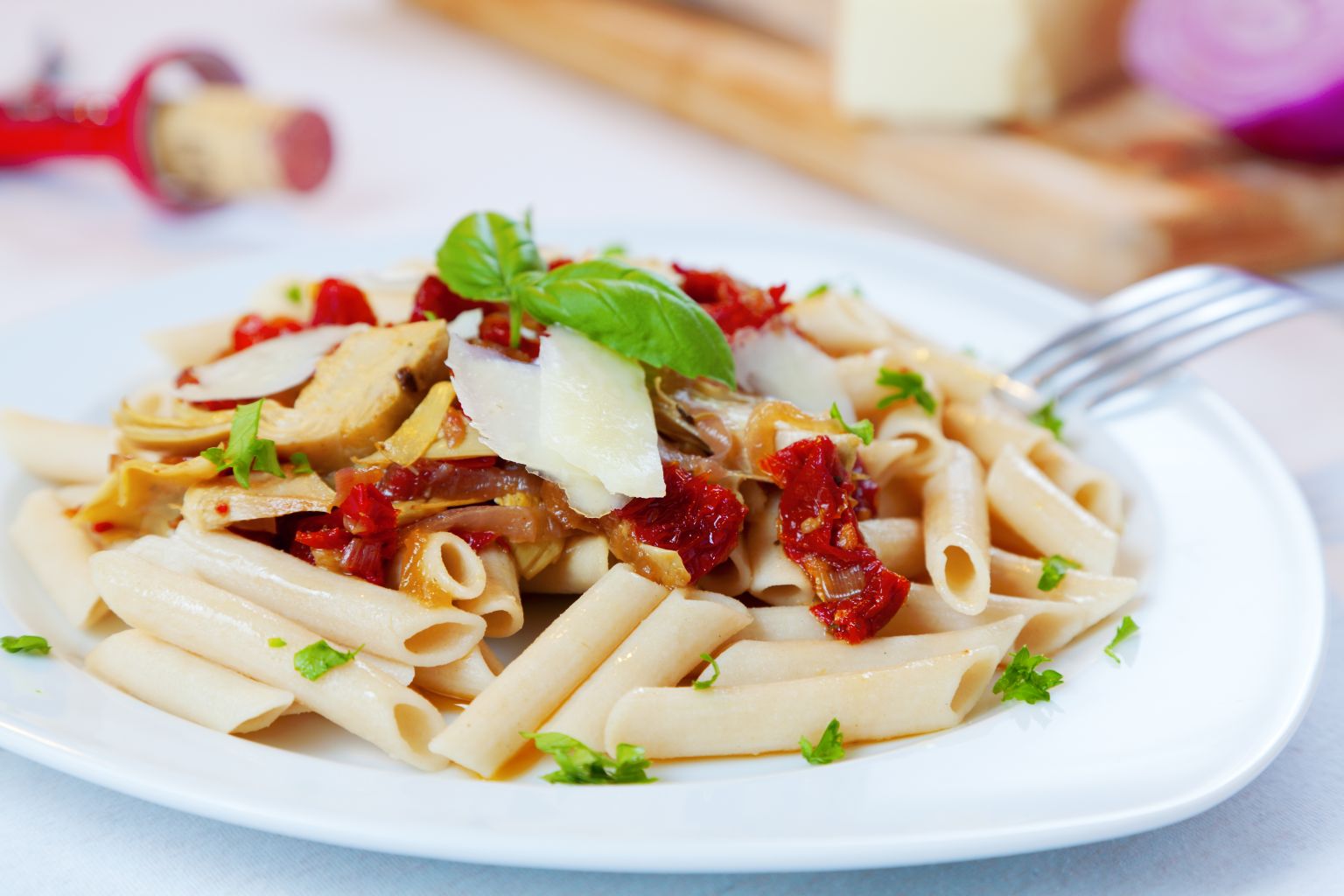
Following the healthy eating trend, pasta ranges now have something to suit everyone, with organic and whole meal pastas becoming increasingly popular. Major chains such as Asda and Tesco offer gluten-free pasta also, which is gaining popularity amongst customers. Other pastas offer a choice of standard and healthier pasta, especially enriched fortified with iron and vitamins or whole meal pasta, which contains more zinc, iron and fiber. Combining best of two of the most popular cuisines: Indian and Italian, Bidvest now combines Italian pasta with Indian tikka, in a Pasta King Pasta with Chicken Tikka sauce. In pack sizes of 10 kg it combines cooked wheat pasta, tomato sauce, tikka masala paste and suitable herbs. This really is aiming to combine the best of both worlds in one dish!
Macaroni cheese
This is such a staple of British food, that it’s hard to realize that it is not home-grown. Most stores sell a variety of meals that have macaroni as its base, in a cheese sauce. But Waitrose has come up with Frozen mini macaroni cheese 250g. Cleverly its USP is that it is made of luxury ingredients, including free range eggs and full fat milk, and it offers pasta in a silky savory Cheddar cheese sauce, which buyers can cook straight from the freezer.
PASTA ready to (h)eat
Under this catchy title, the German company Keck offers Long-Cut, Frozen Pasta – Cooked Precisely and Frozen as Noodle Nests. This German company’s fully automated plant produces customized portion packs for the restaurant trade, up to massive sized packs for industrial catering. Keck say they are one of the few manufacturers of pasta who cook long-cut pasta like spaghetti, tagliatelle, papardelle, or Asian noodles: these they flash-freeze as noodle nests with an innovative technology. Customers can choose from standard products or determine the form, the weight (between 50 and 300g), the cooking point and the packaging of individual noodle nests.
Chinese noodles
The Chinese have probably been eating pasta noodles for over 4,000 years, and legend has it that the Venetian explorer, Marco Polo, bought back pasta when he went on a rather long Gap year voyage to China. Today, the British tend to think of Italian pasta as mainstream, and Chinese noodles are generally found under ‘foreign’ or ‘Chinese food’ sections in British supermarkets. Although Chinese food is extremely popular in Britain, customers tend to think of it as a take-away meal, rather than cooking t themselves, and so will look for it in a specialty section. Of course Noodles are an essential ingredient and staple in Chinese cuisine, and like Italian, there is an enormous variety of Chinese noodles, which vary according to their region of production, ingredients, shape or width, and manner of preparation.
Today they are an important part of most regional Asian cuisines; in Malaysia, and other South East Asian countries. Chinese style noodles have also entered the cuisines of neighboring East Asian countries such as Korea, where it’s known as jajangmyeon, Japanese ramen, as well as eaten extensively in Vietnam, Philippines, Thailand and Cambodia. Britain has some of the oldest Chinese settlements outside the mainland, and for years they have developed an extensive and efficient take-away service, so manufacturers tend to concentrate on selling bulk packs of noodles to restaurants and take-aways. However, a few dip their toes into this specialist market, such as Tesco with its Healthy Living Chicken noodle Laksa.
Vegetarians and vegans
Most pastas with pure tomato or vegetable sauces are suitable for these customers, but vegans have to be careful that the pasta is made without egg. Most regular semolina white pasta and whole wheat pasta is vegan. As a general rule, egg noodles are almost never going to be vegan, unless you can find one that is a “faux egg noodle” pasta. Ardo has a Mediterranean Salad for this market, with Insalatta Mediterranea – ready-to-eat pasta salad of pre-cooked penne with grilled courgettes, grilled red peppers, grilled yellow peppers, sun-dried tomatoes, onions and Mediterranean dressing.
 What’s happening in Europe?
Food lovers, who consider French cuisine their food of choice, will be concerned to read a report from USDA (US Department of Agriculture), saying that for the first time in ten years, sales in the Hotel, Restaurant and Institutional sector in France decreased by 0.3 percent with estimated sales at USD106.10bn. Also, and for the third year in a row, the average meal expense decreased in 2014 to EUR8.82, while the number of meals served continued to increase, as consumers shift to lower cost meals and snacks from fast food outlets, coffee shops, food trucks and carry out chains. The main meal now seems to be the evening one, instead of midday lunch. This trend seems to be spreading across the Continent. It probably started with Britain, in the fore-front of the Industrial Revolution. This shift from farm work to factory changed the workplace, and meant people moving to cities and working away from home, hence the main meal shifted from midday to evening over the last two centuries. Today, with even the French taking a mid-day snack, instead of the two-hour meal break, it could be that their eating habits are shifting.
Private label
First focused on price, private label food products were part of the success of the discounters in the beginning. Their rise was fuelled by the global economic crisis, as buyers were eager to save where they could – knowing that own label products were of a good standard. However, that has changed. Nowadays there is not only price competitive standard private label products, but also more expensive high quality premium products. Stores are reacting to customers’ needs, and producing luxury own label brands. Consumers are discovering the high value for money that private label brands are offering and how they can be an actual alternative to established brands, without costing too much. The Private label market share is expected to increase further, driven by the increased profitability it is giving to retailers. And of course, the giant German retailers, Aldi and Lidl, are gaining an increasing share of the UK market – as British consumers are overcoming distrust of Private label products and becoming firm fans of their basic food items and occasional treats philosophy e.g. high end products that come out for Christmas etc.
Adding value
In Britain customers tend to ask for grated Parmesan when they order pasta in a restaurant – but forget to sprinkle this on when serving at home. However, savvy retailers can suspend blister packs of small graters on shelves over the freezer cabinets, such as the Fine Grater from the grate range by Dexam; sold by Tesco for GBP5.40. And station a basket of small Parmesan pieces nearby – aiding profitable impulse purchases. Pasta really suits today’s consumer around the world, searching for tasty but quick basics for meals. Producers must be on a roll when launching new items in this range.