

As is the case each fall, representatives in the cold storage, refrigeration and transportation industries gather to discuss essential issues surrounding the segment, but also to meet potential business partners, during some of the most significant networking events held in Europe.
Rotterdam will be host to the 5th Cool Logistics Global conference, an event which connects perishable cargo owners with cold chain logistics and transport professionals from around the world to assess key market trends and operational best practice for the international movement of chilled and frozen cargoes by air, land and sea. Cool Logistics Global is convened this year under the headline theme “Transparent, efficient and fair: Charting a new course for global perishable supply chain operations.” Covering two days of business sessions, a full day of operational debate, field trips to a FloraHolland flower auction and Maasvlakte 2 port development, plus two evening receptions, the event once again brings together shippers, carriers, 3PLs, ports and terminals, technology providers and other key stakeholders to network in advance of annual contract negotiations.
New reefer design
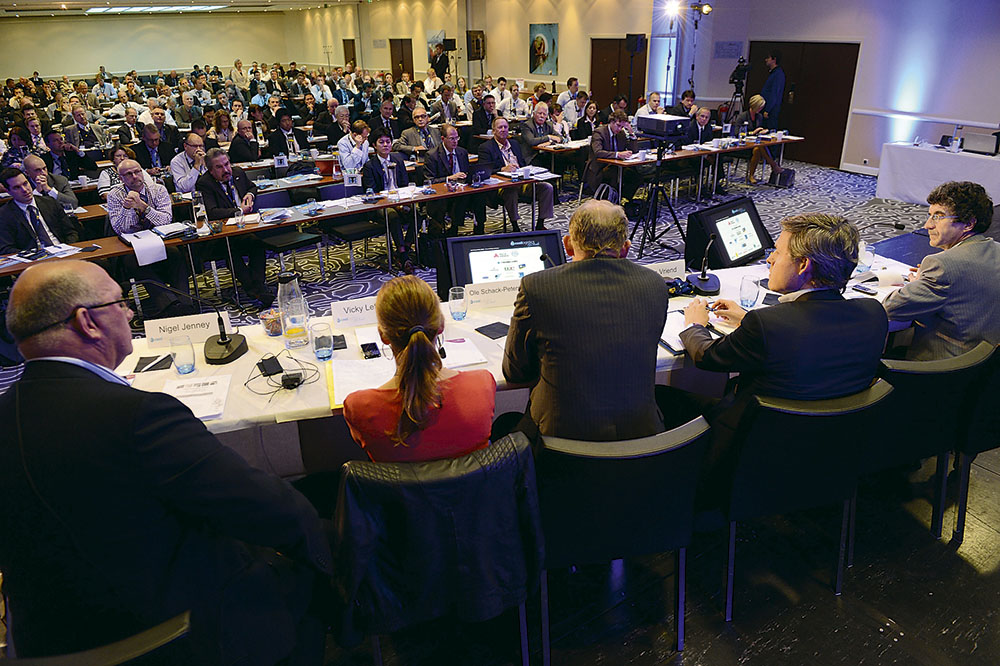 As container carriers continue to struggle with shippers to gain acceptance for rate increases, the conventional reefer shipping and logistics sector is about to witness the launch of a radically new reefer ship design at the Cool Logistics Global 2013 conference in Rotterdam, 24-26 September. “While the focus in recent weeks has been very much on the launch of the Triple E Class Vessel by Maersk and speculation about the likely impact of the new P3 Alliance on the major East East-West trade routes, developments on the South-North route, which remains the backbone of the world’s perishable trades, have attracted far less attention,” says Rachael White, joint managing director of Cool Logistics Resources. Little is known about the new concept other than by combining a horizontal pallet handling system with lo-lo features for containerized deck cargo, record handling speeds are expected be achieved in ports. According to Birger Lindberg Skov of designer Reefer Intel, the new ship will be able to compete on costs both with existing reefer carriers and the container lines. A four-week round trip between the Caribbean (five, if Ecuador is included) and a number of chosen North European ports is currently being considered. “Critically, the new design will allow the fruit companies to remain in control of their supply chain,”
Per Westling, managing director of Stena Roro, will say during his keynote presentation at the conference. The increased reliance of fruit supply chains on transshipment operations, multiplying the chance of handling errors and delays as reefer cargoes pass through multiple container ports, remains a source of considerable concern for shippers. “Speed and direct calls are the trump cards for conventional shipping to survive the relentless competition from the container lines,” says Alex von Stempel, fellow MD at Cool Logistics Resources. “This is what the industry has been waiting for,” says Johan Claes of Sea-invest, the leading conventional terminal operator in Europe. It is understood that tender contracts for the new vessel have been placed with a number of Chinese shipyards and that the winner will be announced shortly. The presentation of the new ship design will head off the annual ocean freight panel debate which will include subjects including reefer box profitability, equipment management, general service reliability and the likelihood of renewed reefer rate increases. Speakers this year will include Thomas Eskesen, Global Head of Refrigerated Business at Maersk, Eric Eng, Vice President, Global Reefer Trade at APL and Frank Ganse, Global Director Reefer/Perishables at Kuehne+ Nagel. Kevin Bragg, Managing Director at Bonita Europe, the world’s 4th largest banana exporter, is also newly confirmed to join the debate. The three-day conference will focus on shipping, airfreight, port and inter-modal issues, including a technical Reefer Operations Day when operational and environmental issues will come under the microscope.
Focus on productivity
Another major fall event for the cold storage operators is the ECSLA Fall Cold Chain Logistics Conference, taking place in the Portuguese capital Lisbon on September 16-17. Under the heading “Energy efficiency and productivity of the workforce key in warehousing and cold storage” the program will feature plenary sessions, a trade show, council meetings, a facility visit, the ECSLA Fall General Assembly and a networking dinner. For companies involved in the market segments of cold storage, refrigerated warehousing and/or temperature-controlled distribution, the Lisbon conference offers a great platform for learning about practical problems cold store operators’ face and informing them about new solutions and technology the market offers in order to support them in running their business efficiently. Among the topics of discussion prepared for this edition of the ECSLA Fall Cold Chain Logistics Conference, experts and industry specialists will debate on issues such as “Energy consumption, future rates and energy efficiency in Portugal and the influence on warehousing operations,” “Management techniques and technologies that help get the best out of a workforce and increase productivity,” and “The Future of the European Cold Storage and Logistics Association”, floored by the ECSLA president, Luc Put.
The conference also features an area especially reserved for a small trade show, where suppliers can exhibit their products and services and meet with potential clients. Participation is open to all, but members from ECSLA, GCCA, OPAL and all national cold storage associations affiliated with ECSLA benefit from discounted rates. Moreover, ECSLA is inviting European cold store operators to participate in the Benchmarking Study 2013. The basic part of the study is similar to earlier editions, in order to discover certain trends in our industry. On top of that, two additional topics have been defined: (1) Blast freezing and (2) Workers Health & Safety. These additional topics are optional, however, the results of these parts will only be reported to participants that have supplied information. The results of the study will be used to produce a report, which will offer a very effective tool to compare performance and certain cost elements with other cold store companies and to obtain insight in cost levels by country. Assembling data, analysis and reporting is conducted by independent expert Prof. Dr. Kees Jan Roodbergen and a team of scientist of the University of Groningen, Netherlands.