
The escalation of the Iran conflict and the effective closure of the Strait of Hormuz has pushed oil markets back into crisis territory, with Brent crude moving above USD100 per barrel.
For packaging stakeholders, however, the implications extend far beyond energy pricing. What is unfolding is a systemic disruption across feedstocks, materials, and logistics — one that exposes the structural dependencies underpinning the global packaging industry.
At the centre of the crisis lies a simple but often underappreciated reality: packaging is not just energy-intensive; it is materially dependent on hydrocarbons. As Sheikh Nawaf al-Sabah, CEO of Kuwait Petroleum Corp., warned, “the costs of this war don’t stay within geographical lines in this region. They extend all the way through the supply chain.” That extension is now becoming visible across every major packaging substrate.
A Feedstock Shock With No Immediate Substitute
Plastic packaging sits at the most exposed end of the spectrum. Polyethylene (PE), polypropylene (PP), PET and other polymers are directly derived from petrochemical feedstocks such as ethylene and propylene, themselves tied to crude oil and natural gas liquids. When oil prices rise sharply, the cost transmission through naphtha and olefins into polymer resins is both rapid and mechanical.
The current disruption adds a second, more severe layer: physical supply constraints. The Strait of Hormuz is not only a transit route for crude oil but also a critical corridor for petrochemical feedstocks and finished resins. With flows curtailed, the industry is facing the dual pressure of rising input costs and tightening availability.
As al-Sabah noted, “there is no substitute for the strait.” This is particularly acute for petrochemicals, where alternative routes or pipeline capacity cannot compensate for maritime disruption. The result is a supply shock that pricing mechanisms alone cannot resolve.
The Domino Effect Across Materials
While plastics are the most directly affected, the disruption is cascading across all major packaging materials.
Paper and board producers face rising energy costs driven by constrained LNG flows, which account for a significant share of global trade through the Strait. Higher fuel costs are compounded by extended shipping routes, as vessels reroute around Africa, adding weeks to transit times and inflating freight rates.
Aluminum packaging is similarly exposed. Production is highly energy-intensive, and Middle Eastern smelters — key suppliers to global markets — are now operating under both logistical and energy constraints. Additional war-risk surcharges and restricted port access are further tightening supply.
Even glass, often considered less exposed to oil markets, is affected through energy pricing. Glass furnaces rely heavily on natural gas, meaning cost inflation is unavoidable in a sustained energy shock scenario.
The cumulative effect is a broad-based increase in packaging costs, regardless of material choice. Substitution strategies offer only partial relief, as each alternative carries its own exposure to energy or logistics constraints.
Logistics: The Silent Multiplier
If feedstocks represent the first-order shock, logistics is the multiplier that amplifies it.
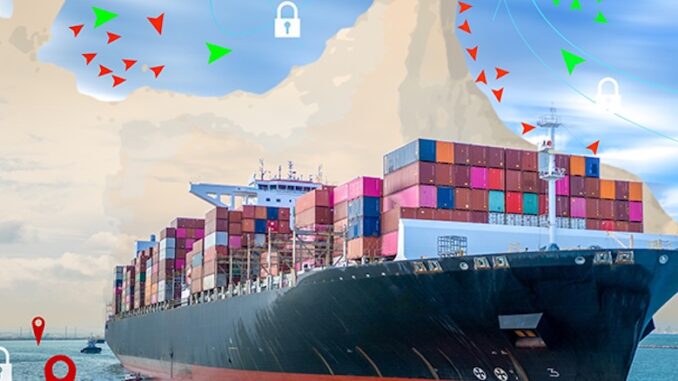
The Strait of Hormuz functions as a critical node not only for energy but also for containerised trade. With traffic severely reduced and major carriers restricting services to Gulf ports, capacity constraints are spreading across global shipping networks. Approximately 10% of the container fleet is reportedly trapped within the region, while rerouting via the Cape of Good Hope is extending transit times by up to two weeks.
For packaging supply chains built on lean inventory models, this is a critical vulnerability. Typical buffer stocks of four to eight weeks are rapidly eroded when lead times increase and supply simultaneously tightens.
Freight costs are rising through multiple overlapping mechanisms: fuel surcharges linked to oil prices, war-risk premiums, congestion charges at alternative hubs, and capacity-driven rate increases. Combined, these pressures can push total logistics costs significantly above contracted levels, eroding margins across the value chain.
From Cost Inflation To Physical Shortages
The industry is now moving from a cost-driven disruption toward a potential availability crisis.
Polypropylene markets, already operating with reduced inventories, are particularly vulnerable. Any additional curtailment in production or feedstock supply risks translating into physical shortages for converters. Similar dynamics are emerging across PET and other widely used resins.
The implications extend beyond packaging producers. As al-Sabah warned, petrochemical shortages will “make it difficult to transport food around the world,” while fertilizer disruptions could impact agricultural output. Packaging, as an enabling layer for food distribution, sits directly within this broader system risk.
For brand owners and retailers, the consequence is clear: higher packaging costs will feed into end-product pricing, reinforcing inflationary pressures across consumer markets.
Geopolitical Rebalancing Of Supply Chains
Beyond the immediate disruption, the crisis is accelerating a shift in the geopolitical balance of packaging supply chains.
Asian petrochemical producers — particularly in South Korea, Japan, and Taiwan — are already reducing operating rates due to feedstock and energy constraints. In contrast, China’s coal-based petrochemical capacity and access to Russian feedstocks position it to maintain or even expand its role in global supply.
At the same time, North American producers, benefiting from shale-based feedstocks, are relatively insulated from the disruption and may capture additional market share.
This divergence risks concentrating key segments of the packaging value chain in fewer regions, increasing long-term dependency risks for global buyers.
A Structural Reset In Motion
The current crisis is not an isolated shock but a catalyst for structural change.
First, it reinforces the case for regionalisation. Dependence on a single maritime chokepoint for critical feedstocks is increasingly untenable, and investment in local or near-shore production capacity is likely to accelerate.
Second, it improves the economics of recycled materials. As virgin resin prices rise with crude oil, recycled polymers become more competitive, potentially accelerating circular economy initiatives already underway.
Third, it sharpens the focus on material efficiency. Lightweighting and design optimisation, long pursued for sustainability reasons, now offer immediate cost advantages in a high-price environment.
These shifts were already in motion. The Hormuz disruption is compressing timelines and forcing decisions.
A System Under Stress
The closure of the Strait of Hormuz has made visible a structural vulnerability that has long existed but rarely been tested at this scale. A global packaging system built on interconnected supply chains, hydrocarbon feedstocks, and just-in-time logistics is now confronting a multi-dimensional shock.
As al-Sabah put it, “this is an attack… holding the world’s economy hostage.” For packaging stakeholders, the hostage is not just energy supply, but the continuity of materials, the predictability of costs, and the reliability of delivery.
Whether the disruption lasts weeks or months will determine the depth of the impact. But the direction is already clear: the packaging industry is entering a period where resilience, rather than efficiency, becomes the defining competitive factor.
To stay up to date with the latest trends, technologies, and insights from the world of packaging, visit our sister editorial project at https://packagingreporter.com/