
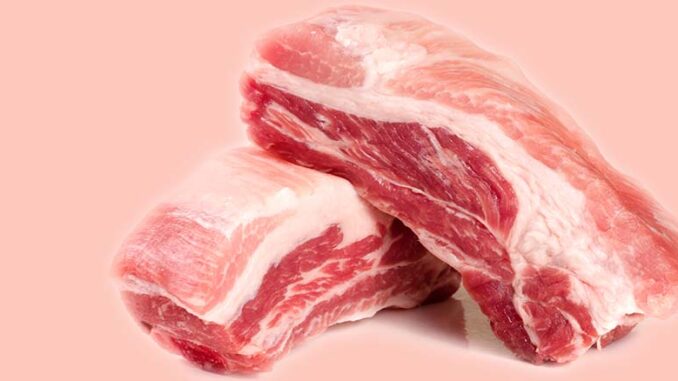
US meat companies warn of potential meat shortages, as the coronavirus sickens and kills slaughterhouse workers. Meanwhile, pork exports to China have surged, according to a Reuters analysis.
US pork exports to China started to increase in August 2018, when China first detected the African swine fever, which has killed up to half its herd. Next came the tariffs that China imposed on imports of US pork, which reduced the number of shipments in 2018 and 2019. President Donald Trump signed a deal in January to ease the trade war, having no knowledge of the supply chain issues that were about to come. At the same time, China promised to increase purchases of US farm goods by at least USD12.5bn in 2020 and USD19.5bn in 2021, over the 2017 level of USD24bn.
Recently, the pork industry has been hit especially hard by the COVID-19 pandemic because hogs are raised inside temperature-controlled buildings, making space limited, and requiring assistance. When the coronavirus outbreak shut down slaughterhouses, farmers began running out of space to keep their growing pigs. In these conditions, exports to China now look like a food security threat.
The data submitted by the Centers for Disease Control and Prevention (CDC) shows that 19 states have reported COVID-19 cases at 115 meat and poultry processing facilities between April 20 and 27. Among about 130,000 workers at the facilities, at least 5,000 have been infected and 20 have died. The inevitable closures and slowdown in production have reduced pork slaughter capacity by about 35% to 40%, and beef slaughter capacity by about 30% to 40%, according to the US Department of Agriculture (USDA).
The disruptions mean American consumers could see 30% less meat in supermarkets by the end of May, at prices 20% higher than last year, Will Sawyer, lead economist at agricultural lender CoBank told Reuters.