
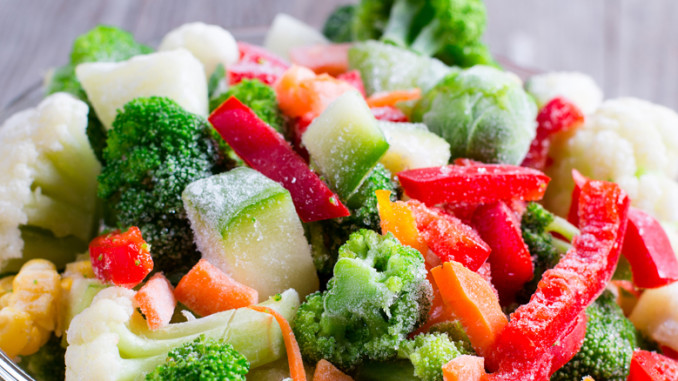
Widespread adoption of healthier diets should keep demand for fruit, vegetables, and herbs (frozen and otherwise) relatively high, reports Jonathan Thomas.
Global demand for fruit, vegetables and herbs remains at high levels, with consumption increasing throughout the world. These foods continue to benefit from the growing demand for natural products containing as few additives as possible, as well as foods naturally rich in the various vitamins and minerals.
Although data suggests that large sections of the European population do not eat the recommended amounts of fresh produce outlined in official guidelines, usage of fruit, vegetables and herbs in food and beverage manufacturing remains high.
Other growth drivers over the coming years include the increasing popularity of plant-based diets, greater uptake of fruit-based products as snacks and heightened consumer interest in ethnic cuisine and new flavour profiles. In the past, the availability of various fruit, vegetables and herbs was constrained by seasonal harvests, as well as potentially disruptive environmental conditions (e.g. droughts and floods).
The freezing process overcomes this issue, enabling consumers to buy products even when they are out of season. Consumer appreciation of the health qualities of frozen fruit and vegetables has grown steadily in recent years since essential nutrients are ‘locked in’ during the freezing process and optimum freshness is preserved. Other benefits of frozen fruit and vegetables include less food waste and elimination of the need for additives such as preservatives.
The individual quick freezing (IQF) process is widely used since it does not compromise in terms of product quality. The IQF process involves a cold blast which freezes the foods individually, after which they are packaged. This ensures that ice crystals do not have time to form, with the result that cells within the foods remain undamaged. Demand for frozen vegetables and fruit continues to increase across much of the western world.
A 2022 survey by the American Frozen Food Institute (AFFI) found that shoppers were purchasing more frozen fruit and vegetables compared with three years previously. Of the 1,500 people surveyed, 86% agreed that buying frozen products made it easier to incorporate fruit and vegetables into their daily diets, while 83% associated frozen fruit and vegetables with reduced food wastage and cost savings. Furthermore, 76% claimed that frozen fruit and vegetables enabled them to eat foods they would be uncomfortable preparing otherwise. Other key findings from the research included the following:
63% of buyers used frozen fruit and vegetables as sides to a main dish;
50% of buyers used frozen fruit and vegetables as ingredients in smoothies/beverages;
44% of buyers used frozen fruit and vegetables as additions to past and rice dishes.
Vegetables
Vegetables offer a myriad of health benefits and are eaten on a wide range of occasions, examples of which include as a main meal accompaniment, within prepared foods (e.g. ready meals and soups) or even as a snack. In Europe, per capita consumption of vegetables is highest in countries such as Turkey, Belgium, and Germany, at more than 200 kg.
Outside Europe, per capita consumption of vegetables is especially high in China, at almost 400 kg. This compares with around 125 kg for both the US and Canada and falls to just under 91 kg in India. Per capita consumption of vegetables lies below 100 kg across much of Latin America but is over 200 kg in North African countries such as Algeria and Libya.
Future demand for vegetables should derive some benefit from the growing percentage of the world’s population now following vegetarian and/or vegan diets. These diets are most popular in Germany and Austria – in 2022, there were almost 1.5 million vegans in Germany (equivalent to almost 2% of the total population), while more than 8 million were classed as vegetarians and/or actively eschewing meat.
Elsewhere, the percentage of the total population taken by vegans is estimated at 5% in both Austria and the UK, with the latter having witnessed a rise in numbers of around 1.1 million during 2023. According to Future Market Insights (FMI), the global market for frozen vegetables is poised to increase from USD53.8bn to almost USD96.5bn between 2024 and 2034, with annual growth averaging 6%.
Much of this is expected to result from health concerns, as well as the convenience of frozen vegetables when availability of their fresh equivalents is compromised. The market continues to witness innovation despite its mature state – Nomad Foods’ Iglo range in Germany, for example, encompasses Pumpkin & Sweet Potato in Lime Butter and Broccoli & Cauliflower in Yogurt Sauce. Some of the more popular frozen vegetables include peas, spinach, sweetcorn, and broccoli.
Market growth may also be aided by the rising popularity of air fryers, which can be used to add a crispy texture to certain types of frozen vegetables, although they are not ideal for cooking leafy vegetables. Around 30% of UK households now possess an air fryer, rising to 37% of those containing children. Of those households with an air fryer, 20% use it every day.
This article is featured in the March-April, 2024 issue of Frozen Food Europe.