
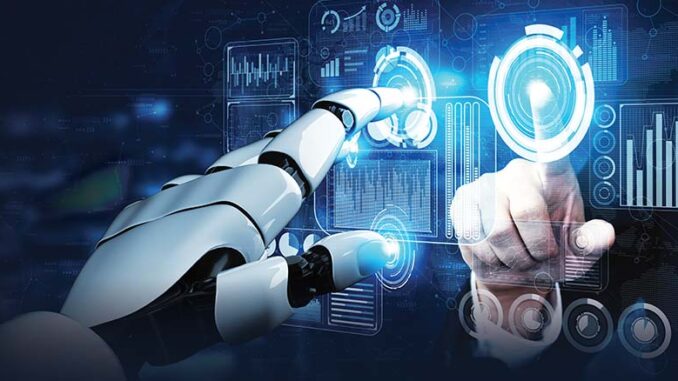
In the past, kitchen professionals have automated most notably their production, scullery, and food distribution. More recently, the dining area and order processing have come to the fore. The trigger for these developments is frequently the problem of finding suitable staff. Will this still remain a problem? By Dieter Mailänder, mailänder marketing
Is artificial intelligence (AI) a digital tsunami that has swept over Europe and the world lately? Definitively not! AI certainly has the energy of a tsunami but by contrast to it, it doesn’t have this kind of desolate destructive power. Although it mixes up a lot of things and even destroys some, the new things that are created are decisive. Clearly, the associated extensive transformations due to digitalization, networking, and roboting are challenging and ambitious but manageable especially since these processes have already been in progress for some time – even in commercial kitchens. For many years their devices, processes, and control mechanisms have been automated increasingly (FFE has first informed you about this in 2016). However, there has not been any development in the last 50 years that has changed the work in gastronomic establishments so much as “automation” – not even the worldwide rapid distribution of hot-air steamers and their further development to all-in-one devices. Noteworthy is that the groundbreaking developments of the past have largely taken place there where the production is. Today, digitally based innovations are included in dining rooms, orders, distribution procedures, and payments.
Automation and staff shortages are often closely related. In some European countries like Great Britain or Germany, kitchens chefs complain massively about not being able to find any personnel and if so, then only with a great deal of effort. It seems as if the job market has currently been swept clean. For this reason alone, one has to invest very heavily in automation – so their position. It is understandable. According to the Federal Statistical Office of Germany, every fourth employee changed from the gastronomic sector to other due to corona-related termination or short-time working, unattractive working hours, and the low pay in this branch. But how is the perspective? Will gastro workers remain scarce in view of the coming years? Will the trend to automation accelerate by this or will the situation become more equalized?
To read the entire article, please access your complimentary e-copy of Frozen Food Europe January-February, 2022 issue here.