
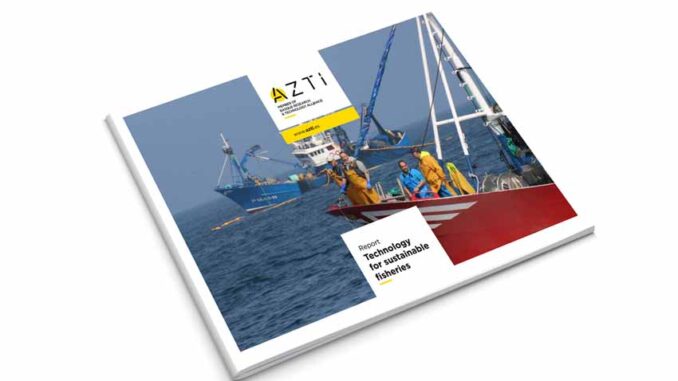
As the European fishing industry grapples with mounting pressures—from climate change and volatile fuel costs to shifting consumer preferences and tighter regulations—AZTI, a Spanish research and technology center, is spearheading efforts to ensure the sector’s long-term sustainability.
In a newly released report, AZTI outlines how digital transformation and environmental innovation can reshape the future of fishing across the continent.
With nearly 120,000 people employed directly and a total catch valued at €6.6 billion in 2022, the fisheries sector represents a vital pillar of Europe’s blue economy. Yet its future is far from assured. AZTI’s latest research proposes a forward-looking approach grounded in artificial intelligence, machine vision, and circular economy principles to tackle both operational inefficiencies and environmental challenges.
The report identifies artificial intelligence as a critical lever for improving fishing practices. Predictive algorithms, developed specifically for key species such as anchovy and tuna in the Bay of Biscay, enable vessels to identify high-probability catch areas, reducing both fuel consumption and associated emissions. Machine vision technologies, capable of automatically identifying, counting, and classifying catches on board, further support real-time decision-making and promote responsible resource management.
Technological innovation is also being deployed to reduce the industry’s environmental footprint. The diversity of the fishing fleet across Europe means solutions must be tailored. “As the fishing fleet is very diverse, there is no one-size-fits-all solution. Depending on the type of vessel, fishing gear or fishing area, a detailed assessment of each situation is essential. From there, we can implement adapted strategies that combine solutions such as optimising fuel consumption, the use of new materials in vessels, alternative energies and improvements in operational efficiency,” said Gorka Gabiña, coordinator of Sustainable Fishing Technologies at AZTI.
The report places strong emphasis on circular economy strategies, particularly in reducing marine litter. Recovering discarded fishing gear and introducing biodegradable or advanced materials into fishing equipment are presented as tangible ways to reduce pollution while opening new avenues for innovation. Gabiña notes that while infrastructure for marine waste management remains underdeveloped, advancing these initiatives could yield substantial environmental and economic benefits.
Bycatch remains another persistent issue, with unintended catches of juvenile fish, sharks, sea turtles, seabirds, and cetaceans posing ecological and regulatory challenges. AZTI explores solutions ranging from electronic monitoring systems—which integrate video, sensors, GPS, and data analytics—to technical advancements in fishing gear and devices designed to release non-target species. These tools aim to provide fishers with accurate, real-time data and practical mechanisms to minimize ecological impact.
AZTI’s report paints a picture of an industry at a crossroads—one where embracing digital and sustainable technologies may prove essential not only to future profitability, but also to the preservation of marine ecosystems. Through applied research and targeted innovation, the organization is making a case for a fishing sector that is both technologically advanced and ecologically responsible.
Find out more at: http://www.azti.es/