
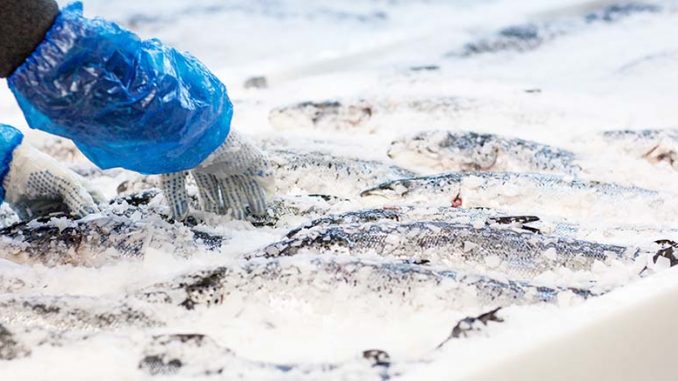
Egypt’s Ministry of Trade and Industry (MTI) issued a decree extending the shelf-life validity period for imported frozen fish from six to nine months and of frozen beef liver from seven to 10 months, the United States Department for Agriculture (USDA) says. Until the promulgation of this decree, Egypt had a shelf-life requirement of seven-months for the frozen beef liver. That requirement, not in line with international norms, did not provide enough time to market the product in Egypt especially since late most market outlets had closed due to the COVID-19 situation.
In Egypt, the shelf-life of all imported foods is determined by the Egyptian Organization for Standardization and Quality (EOS), an agency of the Ministry of Trade and Industry. The agency determines the shelf-life period for Egypt regardless of the imported product’s shelf-life duration in the country of origin. Measures to combat the COVID-19 pandemic outbreak in Egypt has resulted in consumer demand, especially for the beef liver, to plummet. The local industry faced with growing stockpiles called on the Egyptian government to relax product shelf-life requirements and consider using best-if-used dates since this is a quality issue.
This decree is applicable exclusively to imported frozen fish and frozen beef liver but does not include the other frozen variety meats (kidneys and hearts) nor beef cuts. The decision is applicable to products now being shipped, as well as retroactively to a product that has already arrived and is stored in Egypt. Shelf-life for the other variety meats remains set at seven months, while for beef cuts the shelf-life remains set at one-year. In 2019 Egypt imported over 130,000 metric tons (MT) of beef offal.