
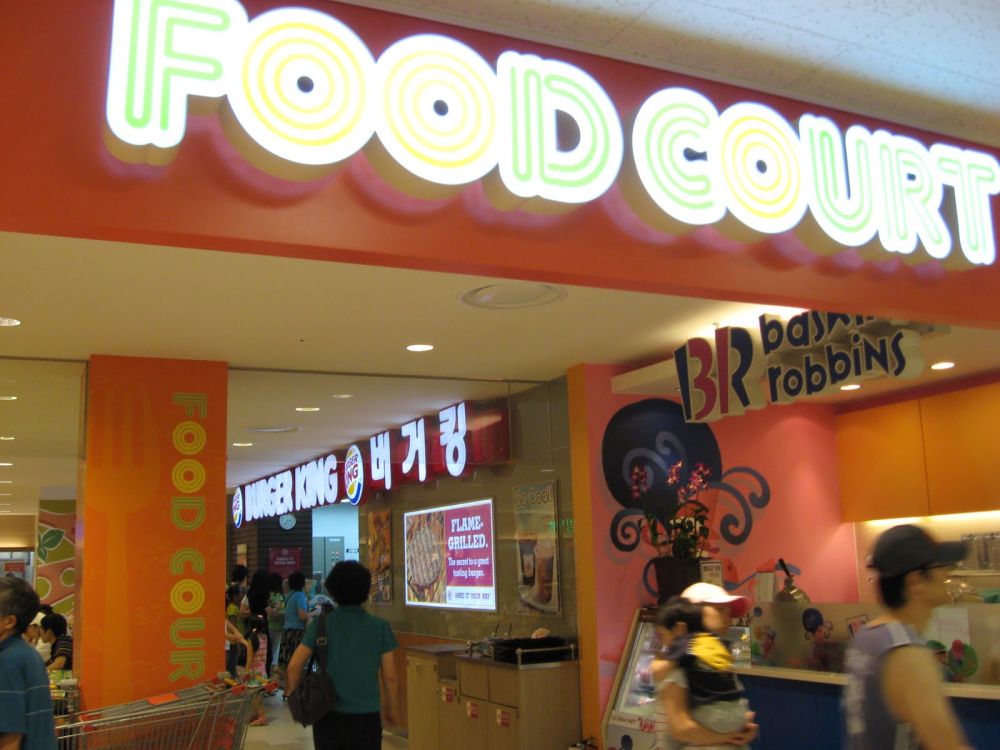
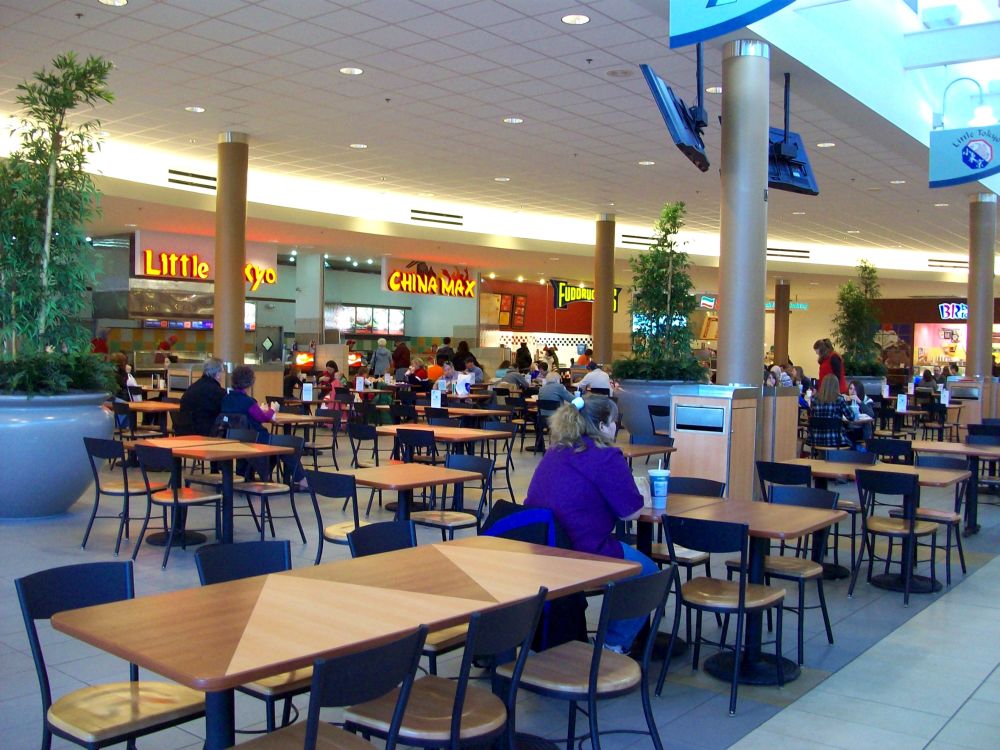
In Britain shoppers have taken to the concept of Food Courts. They like the convenience, and finding a choice of foods in one area. The ‘usual’ fast food outlets are in evidence, but some enterprising outlets are taking advantage of the increasing footfall, and testing the market for healthier and more specialized menus.
Restaurants and cafés opening in Food Courts generally form two distinctive types:
a) Familiar fast-food outlets, using the usual frozen food suppliers from chips to meat and fish, with such as KFC, McDonalds, etc. These make use of supplies purchased in bulk from well-known suppliers, and are often chosen by families who know their children are familiar with dishes served.
b) Outlets that make a point of using local produce and highlighting producers. These tend not to use products from major suppliers. As one told me, “we insist on free range chickens, etc. and major suppliers can’t guarantee this”. This category is often run by young chefs starting out to make a name for themselves; passionate about serving the best food they can obtain.
Westfield shopping centers, some of biggest shopping malls in Europe, make a feature of promoting their Food Courts. For those visiting the Olympic Games site in Stratford, East London, the transport system drops them off at the entrance to the Stratford Westfield shopping centre, with a Food Court with outlets such as KFC, who will be selling its meals in strong competition to official suppliers McDonalds.
Harry Ramsdens
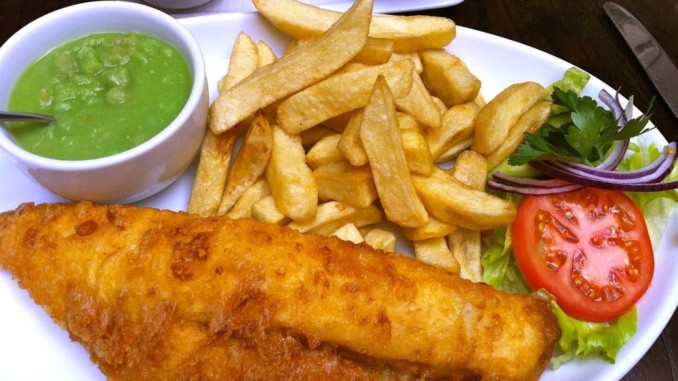
One of the doyens of this second category is Harry Ramsdens; once a single world-famous restaurant serving very British Fish and Chips in an up-market venue. Gradually its fame spread, so it is slowly opening branches in other locations; now there is even an outlet in the Westway shopping complex food court, at the entrance to the Olympic Games. This serves take-away fish and chips, just right for eating whilst queuing to enter the Olympic park. Fish is Ramsden’s staple offering making a point of promoting the healthy properties of fish; even listing different vitamins and Omega 3 that fish provides. Their fish is sustainable line caught cod and haddock, and they promise their chips are made from British Maris Piper potatoes. As an added plus, and catering for a growing market, all Harry Ramsdens’ outlets offer at least one vegetarian option every day, and have changed the way they cook their chips. The traditional way was to deep fry the chips in beef dripping, but this has now been changed to using vegetable or corn oil, so as to be acceptable to vegetarians.
Taking advantage
But to get shoppers to visit food courts and try out these enterprising but unknown outlets has seen marketing staff indulging in very creative marketing. Why? To get around the draconian rules and regulations imposed by the International Olympics Committee (IOC).
This year should have provided a marvelous marketing opportunity. Normally, hosting an Olympics is a bonanza for local stores, supermarkets and shops. Decorated with flags and bunting, these give a festive feel and encourage customers. Visitors flock in whilst locals stock up on supplies to host TV parties watching favorite sports. But the committee running the London Olympics (LOCOG) is fast getting a name for greedy marketing, pandering to sponsors, etc. This has meant that, unlike previous Olympic venues which saw shops and supermarkets gaily promoting the Games with themed promotions, displays, banners and flags, it has seen London as an ‘empty’ city with no flags decorating most streets. Instead supermarkets and fast food outlets had to use creative marketing to ‘get round’ IOC rules. Visiting one famous gastro-pub located in a prime position for watching the road cycling races, it didn’t have a flag on show. The Manager said they wanted to put them up, but all they were allowed to show was very unattractive flags displaying an Olympic sponsor’s logo – so they took them down. Some suppliers have been slow to take advantage of the ‘new’ wave of demand for food provenance in British supermarkets; even Waitrose hasn’t yet supplied a range using free range chicken. Some food courts would like to rely on major producers in the fast food industry, particularly for frozen food, but as major producers don’t supply from local sources outlets have had to re-think suppliers. This has provided a bonanza for the Love British Food promotion team, who are finding that mega-companies such as Tescos are now keen to listen to them and ‘eat local’.
Tesco and SPAR get round rules using Love British Food promotion
To counter this, the Love British Food promotion team stepped in with creative marketing. They really went to town with imaginative ideas, and now supermarkets and many ‘fast food’ outlets have taken them up. As the Olympic brand police do all that they can to prevent the Games giving a boost to austerity Britain, Love British Food 2012 provides retailers with the opportunity to capitalize on the patriotism associated with the ‘greatest show on earth’. Tesco is running Love British Food 2012 promotions throughout its stores, and 2,200 SPAR shops are also taking part. Tesco is delighted with the boost that being patriotic has given their sales, saying that Love British Food 2012 promotions in their cafes are already doubling sales. It is hoped that this success will be replicated across the high street as independent stores, farm shops and delis use British food to take advantage of the Games. Alexia Robinson, organizer of the Love British Food event, says: “Food is a central part of all sporting celebrations, and with the Olympics we have the opportunity of a lifetime to show-off the best of British food to the world. The Olympic organizers have made it nigh impossible for food service organizations to capitalize on the Games; even those with a contract are prohibited from talking about it! But Love British Food 2012 does something to address this.
It is, quite simply, the best opportunity for food service organizations to ride the wave of Olympic patriotism without incurring the wrath of the Olympic brand police. And the fact that so many of the biggest organizations in food service are uniting behind the national food promotion – joined by the biggest names in retail: Tesco and SPAR – shows that there is huge recognition across the industry that if ever there was a time to promote British food, it is now. Even in tough economic times the public will rally behind British food if they are given a reason to. So I predict sales increases for all those involved. Compass is already doubling sales with its Love British Food 2012 promotion in Tesco cafes – the offer sells out most days.”
Food Courts
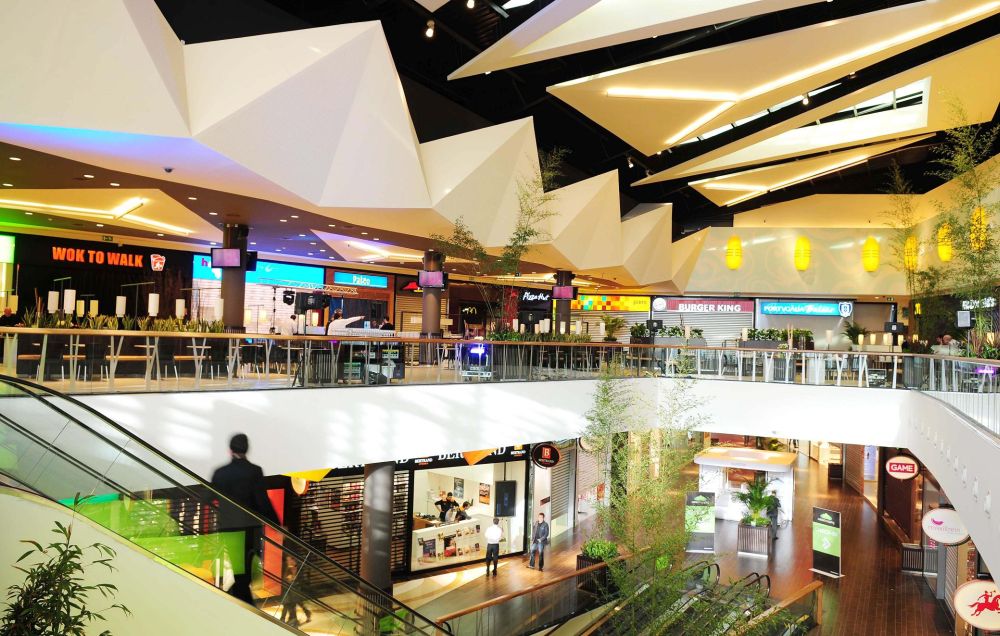
Many shopping malls have gone into business using British pub chains to run food courts including Fullers, Enterprise Inns and Whiting and Hammond. They will be shouting ‘British is Best!’ as people crowd into their pubs to support Team GB. Humpty Dumpty Eggs Benedict, 4 & 20 Black Birds Pigeon Pie, Little Red Riding Hood Velvet Sponge and a Three Blind Mice cheese board are causing interest and adding to sales! To add to coverage, the biggest organizations in food service are uniting behind Love British Food 2012 in their strongest ever display of support for British produce. Led by Aramark, the event’s flagship sponsor, 3663, Brakes, Compass, E-Foods, Harrison Catering and Sodexo are all bringing the patriotic celebrations into staff restaurants and food outlets across the land. The Garden Centre Group is entering into the spirit with special menus and fun competitions. One very good result was that instead of just being centered on the time around the Olympics, this promotion looks like running and running. Even the Hospital Caterers Association is rallying hospitals to bring all the excitement of the Olympics into wards with patriotic menus for patients. Most hospitals will buy in catering from Compass, ISS and similar mega caterers, but the even the major hospital food suppliers have now taken this promotion on board.
Promoting local producers
Long after many French, Swiss, German and other food outlets have made a point of featuring local producers, Britain is now following. There has been resistance; although trend is increasing now for British customers wanting to know the provenance of their food. Sponsors such as McDonalds (who paid millions to be sole providers of food and drink inside the Olympic complex), have suffered from anti-sponsor publicity. At the start of the preparations, the British public were fully behind LOCOG when they announced that the Olympics were ‘going green’; providing ‘healthy food’, etc. A short while later it was announced that McDonalds, Coca-Cola, Cadbury’s, etc. were to be sponsors – and bad publicity reached its zenith when LOCOG attempted to say anyone wearing a Pepsi Cola T-shirt inside the Olympics complex would have to remove it! Adverse publicity reached mega-column proportions in the media, and negative stories abounded. To add to the bad news, both McDonalds and Coca Cola recently announced down-turns in sales and profits: McDonalds posting a 4% downturn globally in the second quarter, and Coca-Cola enterprises reporting net income fell 17% in the same quarter. John Brock, Coca-Cola’s CEO, even said the company faced a “unique combination of unfavorable weather and ongoing marketplace challenges”. And a French tax on sugary drinks didn’t help.
What the public wants
We all know that when hungry customers are looking for a quick meal, many opt for convenience food, such as a Big Mac, or go for something they recognize easily. However, many Governments try to steer them towards a healthier alternative, chips and convenience rule. But as the Love British Food has proven: start in a small way, and gradually the customer will start to look for greener, healthier alternatives.
Study finds Eco-labels “overwhelming” for firms and customers
However, promotion needs care. There are signs that the movement towards labeling foods for eco-friendly content might be confusing more customers than it is helping. In Switzerland the practice of eco-labeling may be on the brink of saturation point and a major new study has warned it is becoming as confusing for companies as it is for consumers. Joint research by the International Institute for Management Development, and the Ecole Polytechnique de Lausanne, suggests the process has become so fragmented that the current industry perception is dominated by wide-ranging reappraisal.
Major international companies such as Nestlé, Sara Lee etc. took part in a study, which sought to investigate why firms adopt eco-labels. They expressed what the study called “substantial skepticism” over eco-labels’ enduring credibility and the rigor of the criteria and certification procedures. Germany’s Ministry of the Environment introduced the world’s first eco-label, the Blue Angel, in 1978 to highlight products’ environmental and sustainability credentials. Now well over 400 are used across 25 industries, prompting growing concerns over proliferation, credibility and consumer understanding. As noted expert Professor Ralf Seifert says, “It’s not just consumers who are confused. Selecting an eco-label has become a highly complex decision for firms.”
“The trend towards fragmentation, which is made worse by a lack of consensus over qualifying criteria, is clearly causing ever more opposition and frustration.”
Duncan Pollard, Nestlé’s sustainability advisor, said: “We may be seeing the first serious reappraisal of the conventional wisdom that if you wish to prove you’re sustainable you need a certification logo.” Dr. Joana Comas Martí, an expert in supply chain environmental management, said: “There’s also a feeling among firms that many eco-label providers launch with good intent but morph into organizations whose desire is to survive rather than serve.”
“This raises serious questions about eco-labels’ effectiveness in delivering real outcomes and their potential to help achieve genuine market transformation.” So, having started long after other countries, Britain consumers are now buying ‘greener’ and more sustainable food supplies, whilst other countries take a long look at labeling.