
Operating over 7,000 restaurants in 40 countries and employing approximately 400,000 people, McDonald’s and its franchisees form the largest restaurant chain in Europe, not only by number of restaurants and employees but also by income. It is estimated by London Economics that McDonald’s contribution to the 2010 EU GDP is equivalent to € 9.5 billion.
McDonald’s has a substantial impact on the European Union (EU) economy. Since its first European restaurant opened in 1971, it has become the largest restaurant chain in Europe by number of restaurants, with 7,002 restaurants in 40 European countries. McDonald’s is also the largest restaurant chain by income: it serves 13.6 million customers a day and generated sales of over € 13.3 billion (in inflation-adjusted 2005 prices) in the EU in 2009. In the same year, McDonald’s contribution to EU GDP is estimated to have been € 9.5 billion. The global recession of 2007-09 presented serious challenges for businesses throughout Europe. However, McDonald’s continued to grow in this period, outperforming the wider EU economy. McDonald’s performance contributes to the European economy by providing employment, demand for inputs – the vast majority of which are sourced from European suppliers13 – and tax revenues for European governments. McDonald’s has also increased its capital reinvestment: this has risen by more than 17% on average per year from 2007 to 2010 (€ 502 million in 2007 – € 738 million in 2010).
Growth despite recession
In early 2011, the European Commission’s economic forecast highlighted that the recovery of the EU economies is under way, but remains uneven across countries. Developments in EU Member States are still pointing to “a rather jobless recovery” and inflation is predicted to increase over the next two years. The Commission considers that “the balance of risks for the economic growth outlook is tilted to the downside” amid ongoing concerns about unsustainably high levels of public debt following the global financial crisis in 2007-09 and increased uncertainty about the global economy due to political unrest in North Africa and the Middle East as well as events in Japan. Against this backdrop, McDonald’s sales in the EU have grown 17% from 2006 to 2010 (and over 41% since 1998) in real terms – that is, adjusted for the increase in consumer prices in the hotels and restaurants sector.20 The following chart shows McDonald’s (inflation-adjusted) real sales as well nominal sales, calculated with both current and constant exchange rates. The distance between the curves measures the impact of exchange rate fluctuations and inflation on the value of McDonald’s sales over time.
During the recession McDonald’s saw continued positive growth and has outperformed GDP growth in the EU, by considerable margins. The company’s net turnover growth exceeded overall EU GDP growth by 3.4 and 4.6 percentage points in 2008 and 2009 respectively, a time when the economy as a whole shrank and other large companies experienced a significant drop in revenues from their European operations (for example, the European revenues of the engineering company Siemens dropped 3.6% from 2008 to 2009 and those of retailer Carrefour fell by 4%21).
Major Employers in Europe – by number of employees
McDonald’s Europe (400,000 employees in Europe – 294,000 in the EU)
Tesco (373,000 employees in Europe)
Metro Group (269,000 employees in Europe)
Danone (30,000 employees in Western Europe)
Unilever (28,000 employees in Western Europe)
Sourcing strategy in Europe
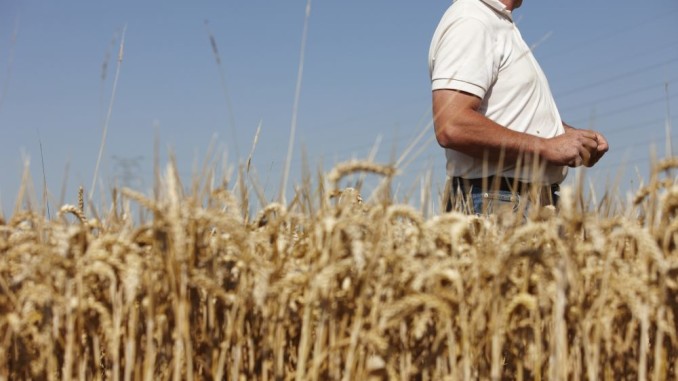
A review of the agricultural products purchased by McDonald’s in Europe through its direct suppliers (food manufacturers) indicates that the majority are sourced from European farms (indirect suppliers). On average, 97% of agricultural products used by McDonald’s are sourced from Europe. Data shows that pigs, tomato paste, potatoes, strawberries, rape seed and eggs used by McDonald’s come exclusively from European suppliers. Out of 19 product categories, only four (pickled cucumbers, chicken, tomatoes and dehydrated onions) are sourced from outside Europe to a significant degree (> 10% of volume). McDonald’s is one of the largest buyers of European agricultural products across a range of product categories. A comparison of McDonald’s purchases with overall agricultural production indicates the extent of McDonald’s impact on the agricultural sector in the EU: its purchases of beef, lettuce and potatoes exceed 1.5% of total production of these products across the 27 EU Member States.
 Menu development creates supplier opportunity
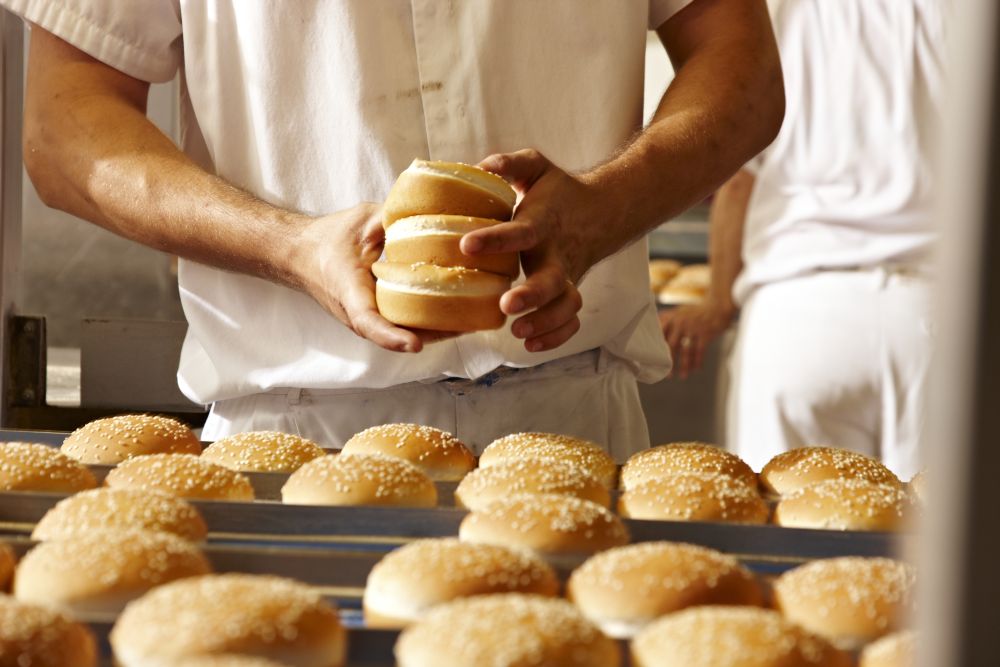
McDonald’s menu development can grow demand for food products rapidly; for example, the company has almost doubled its purchase volumes of fruit since 2007 in order to provide menu items such as fruit bags as options in all Happy Meals across Europe. New business opportunities have been created for local suppliers as McDonald’s has introduced menu items tailored to local taste and geographical preferences using traditional regional and national products.
One of Europe’s largest employers
Together with its franchisees, McDonald’s is one of the largest employers in Europe, with approximately 400,000 employees85 in its 40 countries. Around 294,000 employees
were employed in McDonald’s restaurants and offices in the European Union in 2010. Of these, 98% work in restaurants and around 50% work part-time. Employment provided by McDonald’s accounts for 0.14% of total employment in the EU and 3.2% of employment in the accommodation and food service sector. McDonald’s reports that 50-100 new jobs are created with the opening of each new restaurant. While four million jobs were lost during the recession in Europe according to the European Commission, McDonald’s created approximately 60,000 new jobs between 2007 and 2010.
Impact of the Big Mac
McDonald’s best-known product, the Big Mac, provides a good illustration of the company’s economic impact. The 464 million Big Macs sold in 2009 contained approximately 6,600 tonnes of cheese (0.07% of EU production), 14,000 tonnes of lettuce (0.4% of EU production) and 32,700 tonnes of beef (0.4% of EU production). In value terms, the raw materials needed to produce Big Macs (and Big Mac meals) generated sales of almost €266 million for the food supply industry and logistics providers. Almost all of the suppliers are located in Europe.
Source: McDonald’s