

Once this sector was regarded as a no-no for those on diets, but now trends with gluten-free products and others has meant an increase in shelf space, dedicated to products such as cakes and bread, which once wouldn’t have appeared anywhere near a ‘diet’ section.
More and more, Britain is indulging in an orgy of home-baking. Encouraged by the unexpected success of a minor-budget TV series, the Great British Bake off, there has been a huge revival of interest in home baking. Customers enjoy mixing ingredients together, to produce something they can genuinely call home-baked, and made by themselves, even though all the preparation has already been done for them with ready-assembled baking packages now sold in stores.
DIY with a little help
There is a strong trend towards much more do-it-yourself cooking – no longer are customers content to sit on the sofa watching TV chefs showing off their latest creations. These customers are no longer content to sit and watch as a coach potato, but are keen to get off their sofas and get cooking. However, they need direction, especially as many are from the generation that never learnt to cook at their mothers’ side, but were the first generation that were fed on ready-meals heated up in the microwave.
 Today the mood is to produce something yourself, but today’s generation desperately needs to be shown simple steps – as many don’t even know how to cook a baked potato. Don’t believe me?!! See what McCain’s are up to (below); they have identified a market for this very simple product. Also, last year when Waitrose decided to help home bakers by getting the ever-popular TV chef, Delia Smith, to come up with a glossy package of ready-prepared ingredients for customers to bake their own cake, Mary Berry fronted a ‘spoiler’ package containing a similar cake mix – and knocked Delia Smith off her perch. This year, Tesco’s online grocery order website has a large sign stating that the Mary Berry product is temporarily out of stock, and Tesco’s customer services department can only tell callers that it will be ‘available from the end of the month’ (November).
In the packs, prepared ingredients include ready-weighed currants, sultanas/ raisins, chopped glacé cherries and candied peel, all pre-mixed and pre-soaked in spirit. Weighed out are sachets of plain flour, and spices such as freshly grated nutmeg, ground mixed spice, soft dark brown sugar, and even black treacle: this sachet has instructions saying the treacle ‘will be easier to squeeze out of the prepared packet if you pop it in a cup of warm water’. Just to make the end-product appear home-made, there are instructions saying what the customer needs to provide: butter, eggs, lemon, brandy, to feed the cake.
The ultimate Ready-Baked product
One would imagine that nothing could be easier to prepare than a Baked Potato, but now McCain’s have come up with Ready Baked Jackets, “which have the taste of an oven baked jacket but take a fraction of the time to cook”. They just selected the best British potatoes, drizzled them with sunflower oil and then slowly baked to perfection. As they say “all you need to do is pop it in the microwave for 5 minutes and add your favorite topping”. So popular have these jacket potatoes been that they have posted an apology on their website saying „We would just like to say we are really sorry to all of you who are having difficulty in finding our Ready-Baked Jackets. We have been overwhelmed with the demand of this product, but please bear with us, as we would like to reassure you that we are doing everything we can to increase stock back on the shelves”. Perhaps proving that many customers really can’t cook, but like to buy a ready-produced product that they can pretend they have made.
Even wedding cakes
Many Brides’ mothers faint when they hear the cost of a wedding cake, but Marks and Spencer have come up with an almost-bespoke service for a traditional two-or-three-tiered cake, making it easy to order, and also save money. These cakes can be ordered at their stores around Britain, and to ensure that the cake arrives in perfect condition, they have specially designed cake boxes to protect the product. They even have a helpful video online, showing customers how to unpack the cake to ensure it is in perfect condition to grace the centre of the table.
Build on tradition
With Christmas approaching, Imagine spending a winter’s afternoon with the children, making a fairytale-style gingerbread house… it’s the stuff of magical Christmas memories. Britain has a household supplies store, Lakeland, which is full of useful plastic gadgets which customers can’t get anywhere else. Now, they have gone in with the Pertzborn family of Germany to provide a new twist for British customers, not used to Gingerbread houses. Using traditional gingerbread made by the Pertzborn family in Germany, to an old family recipe, each part is pre-baked, ready to be ‘cemented’ together with white icing. The hard work has been done for customers, so they promise “you can get on with the fun stuff” – decorating with chewy sweeties, chocolates and hundreds and thousands!
Piping bag, fairy tale folk and foundation tray… absolutely everything is included, from the foundations up! With easy-to-follow instructions, they promise “it will make a fun gift for little ones, and they’ll be so proud of their edible abode when it’s finished!” It also might give store owners ideas of producing ready-made kits for other celebrations, such as a Valentines’ Cake, or a Simnel cake for Easter-time.
Or supply a table and power point, and get a teacher from the local technical college to put on a demonstration in aid of a local charity – with ingredients supplied by your store so customers can go home and cook the same dish!
An hour or two placing packets and other supplies near the demonstration, a couple of ‘motherly-types’ hovering near by to give advice, and this could be a monthly or weekly focal point to encourage customers to come in-store and have fun. And eventually become brave enough to get seriously cooking!
Free-from
Recently, there has been a rise in customers asking for ‘gluten-free’ products. A gluten-free diet excludes foods containing gluten, a protein found in wheat (including kamut and the ‘IN’ product, spelt), barley, rye, malts, and triticale. It is used as a food additive in the form of a flavouring, stabilizing, or thickening agent, often as „dextrin”.
A gluten-free diet is the only medically accepted treatment for celiac disease, the related condition dermatitis herpetiformis, and wheat allergy. Sadly, with today’s additive-heavy diet, there are customers that can’t tolerate many foods and those including gluten are high on the list.
 A gluten-free diet might also exclude oats. Medical practitioners are divided on whether oats are an allergen to celiac disease sufferers or whether they become cross-contaminated in milling facilities by other allergens, but they are something to beware of. Oats may also be contaminated when grown in rotation with wheat when wheat seeds from the previous harvest sprout up the next season in the oat field and are harvested along with the oats.
The term gluten-free is used to indicate a supposedly harmless level of gluten rather than a complete absence. The exact level at which gluten is harmless for people with celiac disease are uncertain and controversial. A report in 2008 tentatively concluded that consumption of less than 10 mg of gluten per day for celiac disease patients is unlikely to cause histological abnormalities, although not many reliable studies have been conducted. But if customers ask about suitable foods, it might be worth-while asking a dietician from the local hospital for definite advice, and then highlighting this on posters, so all customers realize you can supply these special foods..
Regulation of the label, gluten-free, varies widely by country. In the United States, the FDA issued proposed regulations in 2007 limiting the use of „gluten-free” in food products to those with less than 20 parts per million of gluten. The Codex Alimentarius standard allows for 20 parts per million of gluten in so-called „gluten-free” foods. There are websites with tables containing information on „gluten-free” food manufacturers and the gluten-parts-per-million levels to which each of those manufacturers’ tests.
Gluten-free from Asda
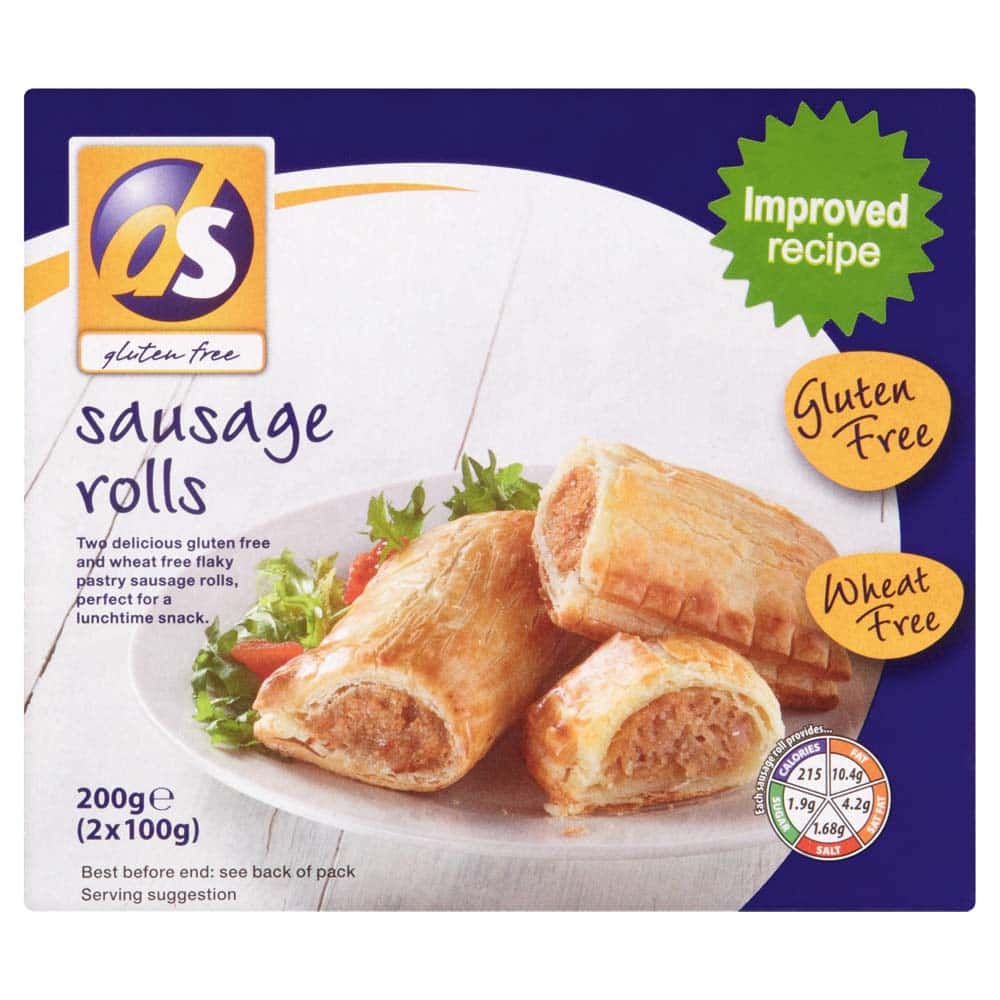
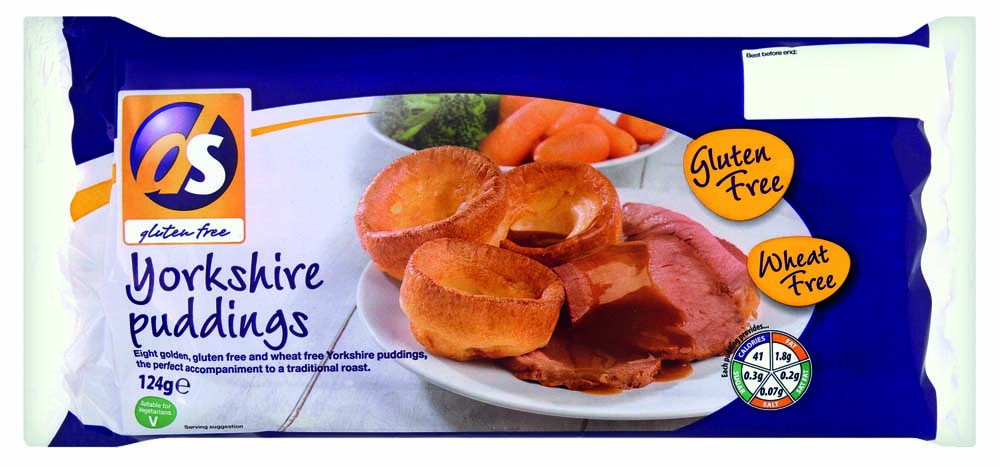
Realizing they had a lot of allergy-prone customers, Asda has done its research and produced a huge range of gluten-free pre-baked products, including the perennial British favorites: Yorkshire pudding and sausage Rolls. So whatever customers like to eat, there are bound to be manufacturers who are making ready-to-bake or pre-baked products, ready to sell off your shelves.