
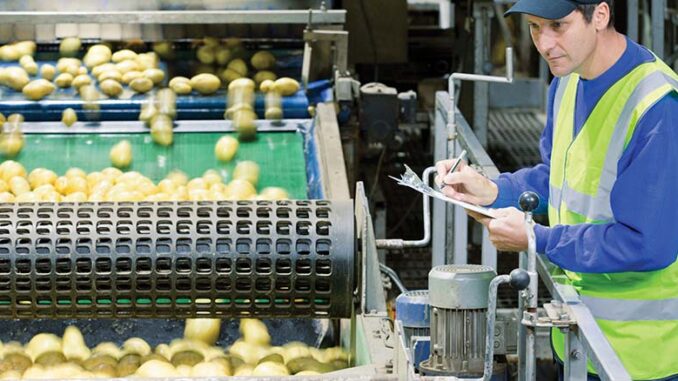
Optical sorters represent an ever-important step in the production of frozen food, and new or emerging technologies play a particularly important role in assuring things such as foreign material removal. What are the latest demands brought forward by customers and how do equipment providers respond to them?
When discussing the main benefits associated with an optical sorter in a production line, Ken Moynihan, the CEO of TOMRA Processed Food says that the typical benefits he discusses when consulting with TOMRA’s customers are securing food safety; improving yield, quality and throughput while reducing labor costs; and innovative optimizations of other equipment throughout the line. „These benefits improve profitability and consistency, and because there is such effective control of food safety and product quality, optical sorters help protect and enhance our customers’ brands.”
Food safety, he adds, primarily means removing foreign matter which comes in with the product from the field. Things like mud, plastics, glass, wood, weeds, or any contaminants from issues in the process itself. Sorters can be located in different positions on the line to detect and eject these unwanted materials. “Product quality can be controlled according to several different criteria: appearance, color, shape, and size. Sorters can take care of all these factors. Even though Mother Nature can be fickle, producing crops that are not homogeneous, TOMRA’s sorters make sure that quality is consistent, ensuring downstream processes are optimally fed and that the end product meets the specifications required by both the processing facility and its customers,” Moynihan explains. “More than this, sorters are also very rich and highly granular sources of data in the production line. Our sorters are designed to know everything there is to know about every single piece in the process and allow users to make effective decisions with that information. That rich data source can then be used to better understand the line performance across minutes, days and seasons, to understand better and optimize the process.”
According to him, the data gathered by sorters also gives processors objective information about what they are receiving from suppliers. This isn’t only for supplier accountability – it can also help suppliers identify where to make improvements in growing and harvesting. In fact, by sharing data, all parties in the value chain can work more closely together to optimize working practices. Regarding demands from customers, the CEO of TOMRA Processed Food says that the first, and universal, demand is that the sorters must perform to their full potential 24 hours a day, 7 days a week. “The sorter is in a mission-critical position in the line. This means that ease of use, very high machine reliability, and fast and effective service, supported by training and operational support services, are essential for our customers to consistently deliver their products safely and profitably.” Looking forward, he adds, there is increasing pressure and legislation for growers to minimize or eliminate the use of pesticides, and this is bringing new challenges to processing lines. With organically grown foods, there can be cosmetically variable products that demand flexible and more powerful sorting parameters, and there is a greater risk of the product being harvested with extraneous vegetable matter, weeds, and bugs, which can all get onto the processing line. Some weeds, such as nightshade and datura, are toxic. This change means customers need sorting solutions capable of adapting to variable product appearance, and detecting and removing weeds even if they look very similar to the product.
“Another pressure is the expectation of sustainable business practices. Consumers demand higher sustainability through the supply chain, which moves from retailers to processors. The fact that our sorters significantly reduce food waste and improve yields is desirable for both sustainability and profitability. Because there are so many variables, we aim to collaborate with each customer to identify exactly what they are trying to optimize, then calibrate their sorters accordingly. Our sorting machines are designed to be flexible and upgradeable in the future to keep pace with changing market needs.”
To read the entire article, please access your complimentary e-copy of Frozen Food Europe May-June, 2022 issue here.