

Today, customers are well-informed. Food shops and restaurants are having to cater and provide answers to concerns over ingredients for this more savvy clientele, which is prepared to spend the time choosing what interests them, rather than picking the first product or menu option they see.
And although the Aldis and Lidls are still winning over customers with low prices, the top end of the market is coming up with what can only be described as “more affordable luxury” e.g. caviar.
Scare stories are still out there, particularly concerning food; currently a major concern in the UK is over Halal meat, with some clients expressing strong preferences for their say in the way their meat is butchered. So supermarkets are having to issue statements on their meat slaughter policies, and even NHS hospitals are being made to state if they do/don’t offer Halal meat as an option to patients, as patients have found out that in some hospitals their policy was to serve halal-only meat – until patients found out and demanded transparency. Waitrose has been commended for not ducking the issue, but issuing a clear statement on their policy so clients know their options. This says: “all of the animals that supply our own label meat are stunned before slaughter, meaning that animals are unconscious and are not subjected to pain”.
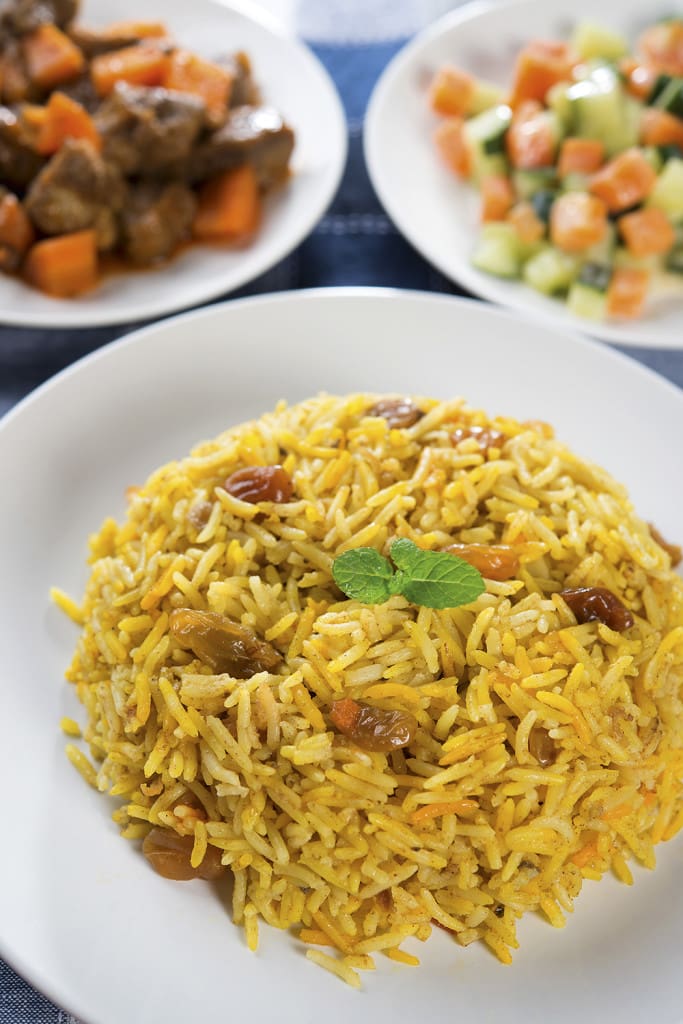 Ready Meals and halal
Ever since horse meat was discovered as an ingredient in some ready meals sold in UK, customers have taken to reading package labels very carefully; recently it was discovered that some halal meat was included – but no mention on packaging. Customers objected, not to this – but to the fact that no mention was made on the label.
UK law currently permits animal slaughter both with stunning and without – a requirement of some faiths. However, to maintain Red Tractor assurance scheme standards, signified by a logo on the label, all animals must be pre-stunned, whether supplied as ingredients for ready meals, or for sale on butchers’ counters.
New Zealand supplies a huge amount of lamb both to European outlets and the Middle East, with a massive trade on ships delivering the best of Kiwi products to eager markets. Their law requires all animals to be pre-stunned at slaughter, and one major outlet is the Waitrose supermarket chain in UK.
Waitrose have been one of the first supermarkets to react to the publicity, and recently issued a statement which said “some of our lamb is slaughtered after a Halal blessing, but in line with our strict policies, it is always pre-stunned. This allows us to sell to other markets the parts of the carcass that we don’t use. This minimizes food waste, keeps prices down for our customers and helps our farmers to be competitive.
To give our customers a choice, our Duchy Originals from Waitrose lamb and the English, West Country & Dorset lamb sold on our service counters is not slaughtered with a Halal blessing. All other Waitrose meat and poultry is non-Halal”.
Legislation
It remains to be seen if legislation to be introduced by the EU next April will clarify this issue. As this magazine reported in February, “The European Union plans to introduce origin labeling for pork, poultry, sheep and goat meat, that will include information on where the animals were born, raised and slaughtered. The European Commission said that the rule will allow EU consumers “to know where the meat they buy comes from, a demand they have clearly expressed.” This new labeling will apply to fresh, chilled and frozen meat, and will go into effect on April 1, 2015. Similar rules already exist for fresh beef’. This will go a long way to reassure customers in UK who have recently besieged supermarket Help lines demanding more information.
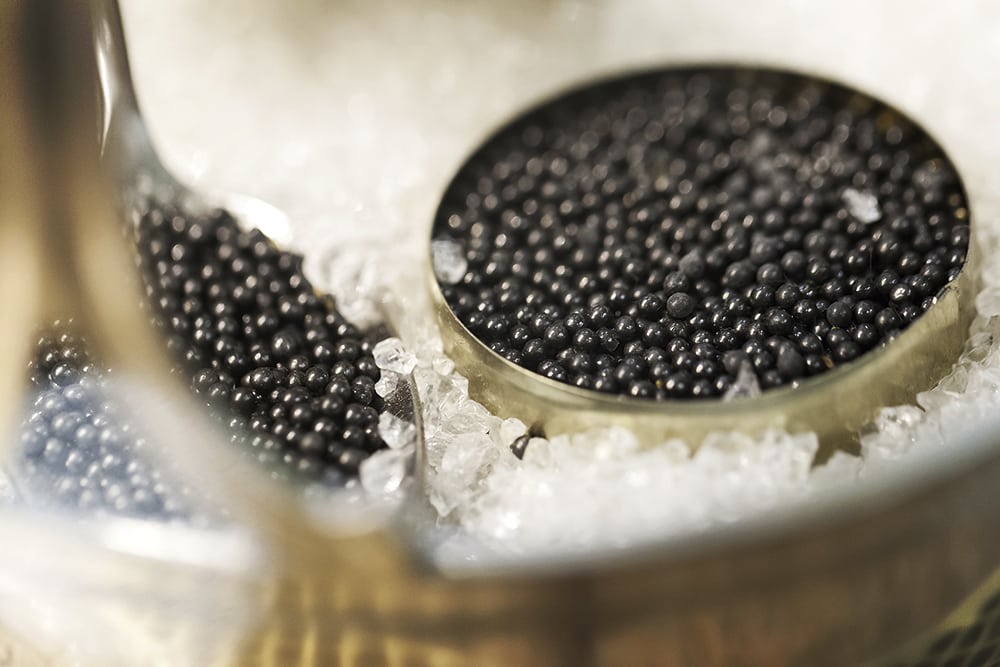 Caviar for the (rich) masses
When it comes to luxury, the mighty sturgeon is now being farmed, particularly in France and Britain, which has bought down the unit cost dramatically.
As probably the most up-market grocers’ shop in London (they supply The Queen), Fortnum and Mason is honest about sourcing – stating clearly if what they are selling is ‘farmed caviar’. Their farmed Beluga caviar sells at GBP215 for 100 gr. Contrast that with Caviar House’s Beluga Caviar – gathered from the wild – at GBP1,025 for 125g. And 30g of Caviar House’s “Prunier’ selection costs a mere GBP205.
Farmed caviar started up around 2010, and production is growing in France; it has now become an interesting product in Britain; starting with the Exmoor Caviar Company, brainchild of Kenneth Benning, and Father and Son sturgeon-farming team, Pat and George Noble. It was started with the sole intention of producing an outstanding home produced caviar in the British Isles, as well as introducing locally farmed fresh and smoked sturgeon meats: all high-end luxury foods. Their caviar sells at GBP249 for 125g.
The product is probably far beyond the reach of the average customer, but shows the way that entrepreneurs are always looking at ways of bringing luxury foods within the reach of more clients.
Another top end product is truffles. However, with the best costing anything upwards of 3,000 Euros a kilo, fake truffle abounds. Every Italian chef known to TV screens seems to lend their name to ‘truffle oil’, Gordon Ramsay is disparaging of many of those. However, selling at around GBP6.50 for a small amount of ‘truffle oil’, or ‘truffle butter’, the public is buying – probably to catch a little bit of the glamour.
Gluten free
Latest food fashion in the free-from food section is ‘gluten free’, with manufactures from Heinz to Dove eager to cater to customers’ demands. Famous follower of a gluten-free diet,
Novak Djokovic, even has his dog, Pierre, eating a ‘gluten-free’ diet; but the Bichon Frise wasn’t available to say if he likes it or not. However, Andy Murray’s Border Terriers are too interested in just eating, and probably won’t be following same diet.
The market is expanding, and now US company Udi’s is opening in the UK market, supplying bagels, crisps, granola and a further host of different options to fill the shelves, and no doubt further expand the ‘Free From’ section.
British Food Fortnight
 Taking advantage of new awareness of food miles, eating locally, etc. British supermarkets and restaurants are planning a big push to coincide with British Food Fortnight’s Bring Home The Harvest, to run from 20th September to 5th October 2014. Building on the success of last year’s inaugural event, Tesco plc will be the main sponsor. The aim is to “champion what is great about British agriculture, and to inspire people to explore and enjoy the diverse range of British food that autumn delivers”, says Founder, Alexia Robinson.
All of a sudden, eating locally-produced and sourced food is fashionable. This has long been the norm across Europe, except in Britain. For years the British weren’t interested in home food and produce, preferring when eating out to go to those offering imported cuisine such as French, Chinese and Indian, which were regarded as more exciting.
However, today Britain is re-discovered its food roots, and now exotic imports using long-distance flights to bring produce to the British table, are out of favor, although it has taken about 40 years from the time that Florida fruit growers set out to increase consumption of their citrus orchards.
So Tesco finds that customers now applaud its support for British farming, and as the largest showcase of British food on the national calendar, they are putting all their efforts into supporting this promotion – saying they are “encouraging more communities, more schools and more young people to start planning their activities now” to celebrate the event. Restaurants are following suit, although it will be some time before their menus list ingredients’ provenance as well-listed as they often are in Swiss, French and other restaurants.
Love British Food will be encouraging shops, pubs and restaurants to run British food promotions during the Fortnight, in conjunction with British Foodies’ favourite daily newspaper, The Daily Telegraph. For anyone visiting Britain, watch out in country fields showing off entrants for their scarecrow competition; there were some surprising and innovative entries last year, bringing together local community groups with shops.
This will be ending in a nation-wide celebration service – this time at Birmingham Cathedral.
Harvest fare on menus: Pubs and restaurants, from the small to the very large are being invited to join in with celebratory Harvest menus during British Food Fortnight. Food service outlets – led by Aramark – British Food Fortnight’s long standing sponsor, Centre Plate, Enterprise Inns, the Hospital Caterers Association and Whiting and Hammond (a major pub group serving meals) will be taking part with special food promotions and offers.
Waste not, want not
 Spreading the message that Britain wastes too much of the food it buys, experts say the average household throws away over GBP600 worth of food every day. To try and stop waste, much is being made of ditching “sell by dates” on labels, or telling customers to ignore these. How long that will last depends on when the first case comes up of someone eating food that had gone bad!
Iconic TV chef Jamie Oliver has a TV program based on using up waste food. Other celebrity chefs and restaurants are riding on the publicity bandwagon, such as Ambrette, with restaurants in the seaside towns of Margate and Rye. They say they are going “to draw attention to the enormous amounts of edible food we waste in Britain”, through using samples of the food ingredients people discard, at two charity dinners.
Chef Patron Dev Biswal will create a gourmet 6-course tasting menu using ingredients commonly thrown away by restaurants, supermarkets, butchers, fishmongers and domestic kitchens: such as chicken skin, cauliflower stalks, coriander roots, fruit peelings, squeezed lemons, lamb’s head, fish heads, skate cheeks, beef trimmings and cheese crusts. The special menu, costing diners GBP39.95, will be served in Rye on 17th August and again in Margate on 31st August. Proceeds will go to the Red Cross.
This event has gained a huge amount of publicity already, so if anyone wants to copy the idea, the menu features Mouldy cheese soup; Crispy fried chicken skins marinated in mango, ginger and red chilli; Savory panna cotta flavored with cauliflower stalks; Fish head stew with summer vegetables; Ambrette style meat pie with beef trimmings and coriander root; and Squeezed lemon posset with summer vegetable peelings cooked in fennel seeds and a sugar and cinnamon compote.
Herbs and Processed Meat
Waitrose has added to its range of frozen herbs with mixes, such as ‘Italian mix’ and Jalapeno peppers. Most popular is probably Parsley, Coriander – and with summer coming up, Mint is popular for vegetable and fruit dishes. Whilst Dorot has a range of pop-out trays for individual clients, up to catering size pails, with everything from garlic to pilaf mix.
Recently, processed meat has received a pasting from cancer charities, bloggers and health gurus. In particular the great British breakfast ingredient, bacon, has come in for particular notice, along with salami. Rumor had it that cured meats might be a cause contributing to cancer, with these two varieties of processed meats coming in with a particularly bad press. This could account for the rise in home-cooked hams, fresh chicken, etc. Last Christmas, every TV chef from Hugh Fearnley-Whittingstall to Nigella Lawson was filmed showing eager viewers how to cook and glaze their own ham, and companies offering postal delivering of ‘home cooked’ hams did a roaring trade.
At supermarkets, it is often the named, locally-sourced hams that are sold first, and there has been a rise in specialty sausages – seen as being more ‘genuine’ than ready-made and manufactured lines: one of the most popular is probably the ‘herby’ Cumberland sausage. Consumers have now had enough food scares to make them wary of claims from unknown researchers, but many are taking more time on their shopping, whilst carefully reading all the labels.
 World’s favourite Fast Food
Just in time for this summer’s mega TV events, Frozen pizza “comes clean”. Functional ingredients from Kampffmeyer Food Innovation contribute to clean labels for frozen pizzas and pizza baguettes with outstanding sensory properties.
Just about everyone who owns a TV set must be thinking about the pleasure they are going to get, watching their favorite Football Team battling in Brazil for the World Cup, or The Tour de France for the millions of continental cycling enthusiasts – up to the older general (in UK in particular) who will settle down to two weeks of bliss as they watch their favorite tennis players battling it out on Wimbledon’s grass courts.
So now is the time to showcase Pizzas – frozen, ready-made or ‘home baked’. They should all be recording mega-sales.
Although taste is king, especially when it comes to fast food, it’s not the only criterion for buying decisions; additives are an increasingly sensitive issue for shoppers, and high grade, natural ingredients are becoming more and more sought after. For most consumers, “natural” means that a food product only contains ingredients they might have in their own kitchen cupboards. This is just one of the findings from Europe’s largest ever market research study into Clean Label, conducted by Kampffmeyer Food Innovation GmbH.
With its commitment to combining function and taste, Kampffmeyer Food Innovation develops natural, grain-based ingredients that can replace additives and enable manufacturers to create products that are perfect in terms of both stability and sensory qualities. With its new functional flour Purafarin HydroSoft®, commonly used additives are no longer needed in frozen pizzas. So shoppers perusing labels for additives, before popping the product into their trolley, will be very happy.