

Customers’ eating habits are changing – and most supermarkets have easily-accessible chiller cabinets by their entrances, stuffed with snack food to cater for this market. Where once workers would down tools, or leave the office for at least an hour for a mid-day meal (in some countries this break was two or more hours), now pressures of work mean most workers eat a snack or small meal at the workplace, in place of a full lunch. And instead of bringing this in to work, they often prefer to buy their snack or meal at a fast-food outlet on their way in.
Healthy eating, allied to the rise in convenience foods, has meant traditional mid-day food such as Cornish pasties or Ploughmans lunches, or their Continental equivalents, being replaced by healthy snacks such as Sushi. Students are great snackers; and although they tend to go for ‘old’ favorites, currently popular foods across European campuses are pasta pots and fresh fruit cups, although less healthy foods such as crisps and chips are still high on their lists.
Scandal replaces traditional ingredients
 Recently, British supermarkets were hit by a horsemeat scandal. Packs of Findus Beef Lasagne were found to contain traces of horse meat – and soon, other supposedly ‘beef’ mince meals were also discovered to have been adulterated. There was shock and horror around Britain and Ireland. Although most Europeans are happy to eat horsemeat, the British don’t like eating their pet animals; and little girls, whose one ambition is to own a pony, were horrified. For a time, vegetarian and vegan foods gained popularity; now that the fuss has died down, it has left millions of ready-made beef mince products waiting to be destroyed, and a legacy of even stricter regulations to ensure 100% traceability for food sold in European outlets.
Appetizers – amuse bouche – hors d’oeuvres
Call them what you will, most people expect them when going out to eat with friends, and most hostesses never have enough ideas for making them. Hostesses snap up so attractive, eye-catching packaging offering these foods. The same with “easy food”, snacks and sandwiches. They are there – everyone knows what they are, but producing them calls for massive efforts. So, customers more and more often look for ideas in their local food store.
Sushi
This is probably one reason why Sushi has suddenly become a very popular snack. Started in China, it became extremely popular in Japan, and is now sold all over the world. Basically, sushi is various food items wrapped around vinegar rice, but this has evolved into very colorful small bites; easy to pick up in your fingers, and with huge eye-appeal, particularly when entertaining. When sushi first came in to Europe, it was only eaten in very avant-garde restaurants. Now, it is so popular that most supermarkets serve up packets displayed in chiller cabinets. Aldi offers a Sushi assortment in their UK outlets for £3, and in Germany Lidl has very popular Sushi boxes in their Munich outlet for EUR 4.99. Carrefour has gone one better: it has opened over 30 Eat’Sushi Restaurants, mostly in France, but these are spreading into Belgium, Luxembourg and Monaco.
Snacking Could Be the Future of Eating
 According to a recent report in Dow Jones Newswire, commenting on stagnant growth in the U.S. grocery business, what it says could almost equally apply to other part of the world in this global business: “packaged-food companies are increasingly turning to snacks as an avenue for growth, as ‘time-impaired consumers’ look for the next tempting snack with healthier and flavorful options”. “Nearly 60 percent of snack launches recorded by Innova Market Insights in 2011 had a health positioning of some kind,” says Lu Ann Williams, research manager for Innova Market Insights, based in The Netherlands. “This is mainly with regard to passive benefits, such as whole-grain, organic, gluten-free or low and light, (with) active benefits, such as vitamin- and mineral-fortification, levels of omega 3 fatty acids or bone health.” And Gary Stibel, chief executive of New England Consulting Group, based in USA, agrees: “Snacking is a long-term trend and the future of eating.” He advises clients such as PepsiCo’s Frito-Lay, the largest salty-snack company in the world. “You and I will continue to snack more and sit down to a meal less.” Consumers are increasingly snacking throughout the day, so Kellogg Co.’s pending $2.7 billion acquisition of Procter & Gamble’s Pringles brand will raise the cereal maker to No. 2 among salty/ savory global snack makers. “It’s as if our social-media habits are going right to our stomachs”, reports USA Today. In fact, analysts and food companies project enough growth in the $560 billion global snacks market, according to Euromonitor, and comments suggest that snack habits are more similar among countries than are meals. Less expensive than meal options, snacks offer the convenience consumers seek, prices can be raised more quickly and easily than staple pantry products, and since they are often unplanned purchases, buyers are willing to grab them, satisfy their immediate snack craving and possibly don’t worry so much about price. Also, with most countries suffering from a recession, the lower cost per unit of snacks can play a big part in sales. A recent U.S. report shows the way snacking is rising, and could show same results in Europe (Source: Technomic 2012-The Snacking Occasion Consumer Trend Report).
For the snacking generation
For producers, top goals are exploring ways to simplify ingredients, yet still deliver the most important factor – great taste whilst satisfying trends, since customers have changed their thinking. They used to think a snack was chips, biscuits or crackers. Now snacks are beverages, mini-meals or three items on a tray. Something that could explain the rise in sales of snack items is research shows that many people have stopped eating three meals a day and gone to five small snacks, possibly as a way of cutting down on calories; this has huge implications for the food industry. Chili pepper, curry flavor and other spicy additions are now seen as the norm, with manufacturer including ‘hot’ flavours such as peppers, with an emphasis towards bold flavours. A big “mega trend” we’re seeing is ethnic food. In the snack arena, it’s easy to translate trends. Within topical applications for snacks, ethnic is a nice ‘playground’. Items such as Korean barbecue ingredients, tandoori or curry flavoring on salty snacks like chips and popcorn are gaining popularity. Today’s customers are going for spicy foods – the hotter the better.
Sandwiches
 The “Sandwich” is probably the most widely recognized snack in most countries. It’s named after John Montague, 4th Earl of Sandwich, an 18th-century English aristocrat; the story goes that he was so intent on gambling he didn’t want to leave the table to eat. So he called for a slice of meat to be clapped between two pieces of bread that he could eat at the table – supposedly the way this snack was developed. Other players began to order “the same as Sandwich!” particularly because this allowed gamblers to continue playing cards and dicing, while eating without getting greasy from eating meat with bare hands. EU hygiene laws have seen the traditional sandwich bar (once a major feature of the British retail food market) disappear. Once a place where you queued up outside at lunch time to have a sandwich made with exactly the fillings YOU wanted, these are now being replaced by chains such as Pret a Manger, that only sell sandwiches (or baguettes) ready-made. So there is no choice now. What these chains offer is a ready-wrapped sandwich, wrap or similar, consisting of bread-type, a spread and a filling. The bread serves as an edible container for the food inside, it can also provide the bulk and nutrients. The spread serves three main purposes: prevents the bread from soaking up the filling making it soggy; adds flavor and also moisture to the sandwich. Known as ‘Pret’ to its millions of customers, the chain has cleverly marketed its wares to the younger, time-poor, cash-rich worker, who cares about the environment. Much is made of fresh ingredients, and a big plus for many is that no food is thrown away; anything left at closing time is given away to charity; this goes down well with its younger, caring clientele.
Wraps and panini
Flat breads of varying kinds, such as naan etc., have long been used to scoop food from plate to mouth throughout Western Asia and northern Africa. From Morocco to Ethiopia to India, bread is baked in flat rounds, contrasting with the European loaf tradition. Now, these wraps have made their mark in the European ready-meal market, and can be seen in fast-food retail outlets as bread-substitute. In Italy, panino is the word for a sandwich made from bread other than sliced bread, such as ciabatta. The bread is cut horizontally and filled with ingredients such as salami, ham, cheese, mortadella etc. and sometimes served warm after having been pressed by a warming grill. Outside Italy, the term panini has been adopted to refer to a pressed and toasted sandwich; fast gaining in popularity, and offering something different but familiar to snack eaters.
Manufacturers are now using Kids’ TV characters for marketing
But beware this type of promotion: many mothers are extremely health-conscious, and can be very vocal if they think that their children are being targeted as part of a sales campaign. Things have become heated in some areas, and blogs such as the influential Mumsnet have run campaigns alerting Mothers to organize a boycott. Some foods branded with children’s favorite characters claim to be nutritious, but are far from it. So next time the salesman comes in with cuddly Kitty or Thomas the Tank Engine branded products, take a good look at the contents, because your customers will, if they own a rapacious toddler who wants to eat everything fattening or unhealthy. Some supermarkets have even enlisted a ‘Mum’s Panel’, that looks at the new products such as Crosse & Blackwell 4 Kids canned meatball range, featuring Tom and Jerry, Doctor Who, Spongebob Squarepants, Winnie-the-Pooh and others. Get the Mothers to agree the food is OK for their kids – and you have a solid customer base.
Chocolate, yoghurt, health food
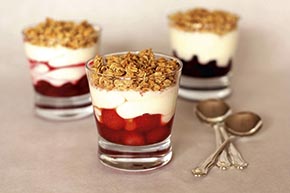 This is a perennial snack favorite; however, keep an eye on prices, as they are due to rise. Chocolate growers are predicting a shortage next year, due to floods that have decimated the crop in some traditional growing areas. There are signs already that manufacturers are taking this into account, and many have decided to reduce the amount of pieces in a packet, or even shave a centimeter or two off a bar. But there will come a time when shoppers realize what is happening – so be prepared. Some of the products on offer are being cynically re-branded as healthy: banners say “No artificial colors, flavours or preservatives!” However, these conveniently forget to mention that they are so high in saturated fat and unhealthy sugar-substitutes that customers might just as well eat the ‘normal’ product. But again, customers are getting savvy- so beware! The good news is that more nutritiously minded producers are finally cottoning on that kids will pretty much eat anything if you slap a sticker on it. Causing quite a stir are Disney’s Easy Peel oranges (with Mickey Mouse stickers!), which have taken oranges from boring duty-food to a zany, many-stickered source of pleasure. Don Simon Disney Smoothies are made only from fruit purees, with no added sugar. And if you sell cook books, Gwyneth Paltrow’s is the latest. Experts now say her no-carb diet for children makes perfect sense. Originally she was castigated for saying she avoids feeding her children carbohydrates, but experts now say she’s right: we don’t need starchy carbs at all. Whatever – it makes a good selling point – and adds to latest snack news.