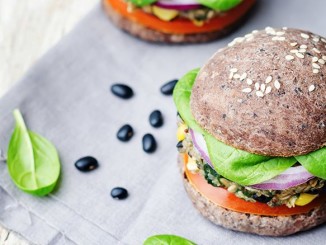
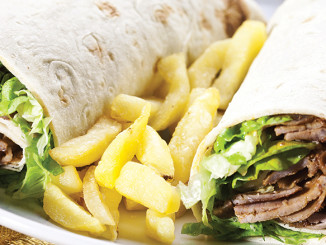
The innovative frozen offering follows the agro-food trends and is focused on bringing gourmet diversity, particularly for the fruit, vegetable, mushroom and fresh herbs category. Monotony kills pleasure and frozen food manufacturers create recipe variations in order to sophisticate their product offering.
By Xavier Pilloy, XTC World Innovation
The idea is to offer a gourmet variation of a recipe, more premium than the standard product, at an affordable price. Thus, there is an assortment of mashed potatoes enhanced by hazelnuts, garlic fries cooked in duck fat, or even one combining several varieties of the same vegetable: a duo of red and yellow carrot sticks, or green beans mixed with butter beans. This gourmet touch may also be the use of cheese, which adds an additional texture to the product, like a fondant potato mini-rösti recipe with emmental spotted on the French market.
Format Games
Varying the format is another lever commonly used by manufacturers in order to provide diversity in the supply of frozen fruits, vegetables and mushrooms. By offering vegetables in a different form, the consumer is invited to discover and to get used to new ways of consuming, and, inherently, the frequency of product consumption is increased. The churro form is often used as it is associated with a gourmet imaginary: we thus find potato, broccoli or sweet potato churros. Rösti is a common form and brings both practicality and appetite for vegetables. We also find them often associated with cheese such as emmental, in order to bring delicacy, but also cohesion to the whole (mushrooms and vegetables are compacted by cheese) – there are also julienne vegetable röstis with emmental, rösti combining potatoes with peppers, tomatoes, zucchini and onions. Two other forms are more widely used: the puck and the mini-gratin. XTC has noticed an atypical couscous puck recipe with grilled peppers, grilled onions and broccoli, while one can cite more elaborate gratin recipes: chestnut and porcini mushroom gratin, asparagus and parmesan gratin, or even parsnip and Jerusalem artichoke gratin. Finally, note the “stick” format, that allows dipping the product in a sauce and which is particularly suitable for a starter. An example spotted by XTC consists of polenta sticks with rosemary.
Pre-cook Frozen Foods
Limitation of frozen fruit, vegetable and mushroom consumption is determined by their lack of practicality regarding out-of-home consumption. The European market offers an assortment of already steamed vegetables, ready to be consumed hot or cold. Cold consumption implies a classic refrigerator thawing, while hot consumption involves baking, cooking in a pan or microwave preparation. The advantage of this twofold consumption is that it is perfectly adapted for snacking and out-of-home consumption.
Imitate Starches
Many vegetable and mushroom product offerings imitating starches are launched on the market. The idea is to offer a vegetable in the classic form of a starch (pasta, rice, semolina, etc.) to facilitate consumption of this vegetable. It is more gourmet to cook a pasta dish made of fresh carrots than to directly consume carrots. Thus, one can find on the market cauliflower and broccoli mixtures which imitate rice, or even zucchini and vegetables presented in thin strips bearing the description of pasta. The innovative concept is based on the imitation of the gourmet starch by substituting the starch with a vegetable (or fruit, or a mushroom) in order to propose an alternative that is healthier and more convenient to consume than a raw product.
New Exoticism
The rise of the flexitarian involves a greater interest on the part of vegetable, fruit, and mushroom consumers. Consumers expect from manufacturers products that are cooked in a higher degree and which are more gourmet than the standard products, which are often too raw. This interest for new assortments of vegetables invites manufacturers to play the exoticism card with stir-fry recipes or World of Flavours. We thus find vegetable mixtures in the Vietnamese, Malaysian, Chinese and even the Hong Kong style. This dynamic is similar to the frozen herbs and spices mixtures, with an oriental style mix (parsley, onion, coriander, mint, paprika and cumin) and a Thai style mix (parsley, onion, coriander, mint, paprika and cumin).
More Naturalness
Naturalness remains a strong consumer demand and particularly in the frozen fruit and vegetable area. Innovation must bring a guarantee to the consumer that the product is natural in order to counterbalance the frozen nature of the product (as opposed to a fresh product). Thus, manufacturers highlight the absence of unwanted, even harmful ingredients in their products. There are ranges of frozen vegetables free of pesticide residues. Similarly, some manufacturers highlight a reduced, minimal ingredient list for their processed vegetable products. We also find vegetable purees that guarantee the presence of only three ingredients (vegetables, crème fraîche and salt).