

The convenience factor, along with a very well structured balance between quality and price continue to drive demand for frozen food on the mature German market, according to some of the important producers who are well-known for their extensive and professional portfolio.
Besides convenience, there are other factors which account for the continued popularity of frozen food products on the German retail and foodservice market. One of the producers who have been active since the early 80’s in this field is frozen meat producers Vossko.
“We notice that the demand for completely cooked, deep-frozen semi and full convenience products made from poultry, pork, and beef is growing noticeably all over Europe. There are several reasons for this. The consumer and professional cooks recognize increasingly that completely cooked articles from Vossko are culinary equal to the uncooked articles of our competitors, but moreover offer a number of advantages. They are prepared considerably faster than the uncooked goods; that is important not only for the end consumer, who has very little time to cook. Cooks in the contract catering business and gastronomy are able to serve their guests with our articles considerably faster than if they had to completely cook our products. Besides that, they have recognized that articles from Vossko have almost no roasting losses. That what the consumer or cook buys, also lies on the plate after regeneration. Kitchen professionals value the safety, which they therefore win for their calculation. At the end of the day, our products offer the greatest possible hygienic safety.

This is equally important for the end consumer as well as for the professionals,” explains Christian Nüvemann, Vossko sales manager export. Vossko has had, on the average, double-digit growth in the amount as well as in value in the last five years. Whereby, the development of the amount is just as important for the company as that of the turnover because it influences the earnings of and the degree of capacity utilization of both plants in Germany and Brazil, to a large degree. According to data offered by company representatives, in 2011, Vossko had a turnover of EUR 129 m and 900 employees and is running to capacity up to a small contingency reserve with their production capacities of 30,000 tons in Germany and 15,000 tons in Brazil. The still young sales areas of food service and export have grown above average, while export already has a share of 20%. It is for these reasons that it is safe to say that the company is on the right track for further development.
Pasta also enjoys success
Similarly, in terms of expectations for the second half of 2012 with regards to market evolution, conditions, perspectives, and overall business environment, another important company is frozen pasta producer Keck, whose representatives feel optimistic with regards to the feedback they have so far received from their customers and business contacts. “Our products not only taste very good, but they also offer the simplest handling and therefore make the fastest preparation possible under hygienically optimal conditions. That’s why our customers can optimize their process cycles and clearly work more economically than if they would use dry goods or fresh pasta. Due to the fact that we have been solving problems for our customers for years, we have worked to obtain a strong market position and that’s why we don’t have to give way to unjustified demands. Therefore, we see the development of the market in our common currency zone and the perspectives that are connected with this with confidence. What consequences the current financial discussions have for us, we cannot assess completely. But if we succeed in stabilizing the countries medium-term which are under pressure, and strengthen the buying power of the population by this, then our business will receive additional stimuli”, say company representatives. Boasting one of the “greenest” plants in all of Europe, connected to the grid in 2003, Keck has enjoyed double-digit growth in the amount as well as in value each year. Today, they produce 22,000 tons of pre-cooked deep-frozen pasta and deep-frozen rice yearly for customers from the ready meal industry, restaurant and quick service chains. In 2010, the company put the new fully automatic deep-freeze high-bay warehouse into operation. At the same time, they have taken over the full responsibility of the logistics, an aspect which greatly helped to improve the entire chain of delivery and the response which Keck offers customers. According to their representatives, Keck can deliver the customers’ contracts 24 hours after the receipt of the order. By means of these investments, the company has managed to expand growth all over Europe, becoming economically successful, while at the same time very ecologically conscious, a topic of ever growing importance lately. Their efforts of sustainability are clearly demonstrated in examples such as producing energy in their own block-type thermal power station, and on top of that using the exhaust heat of the modern two-stage refrigeration facility. For these reasons, Keck has lowered the consumption of primary energy by 25% and the CO2 emission by 65%. Last but not least, by handling their own logistics, the company’s HGVs drive daily 1,000 km less.
Market highlights
According to the latest market data, frozen food consumption in Germany is among the highest in Europe, with sales remaining steady, despite the ongoing recession, with some of the major sectors of the German frozen foods industry including ice cream, meat products, fish and seafood, vegetables, potato products, pizza, pasta and ready meals.
In fact, the vegetables category remains the strongest in terms of volume, followed by ready meals and pizza. According to Mintel Research, the frozen food market by volume increased by 0.8% in 2010, while the total volume for frozen food in 2010 was 1,678.9 (000) tonnes. The strongest growth in recent years for Frozen Food (Germany) was in 2007, with a rate of 3.0% with a compound annual growth rate for of 1.4% for the period 2006-2010. However, the frozen sector has traditionally been hampered by the fact that many German consumers prefer to purchase meat products either loose or chilled, especially as far as sectors such as sausages and/or wurst are concerned, this according to market specialists Leatherhead Food Research. Where value is concerned, the frozen food market increased by 2.0% in 2010, with the total value in 2010 being EUR 6,211.5 m. The strongest growth in recent years for Frozen Food (Germany) was in 2007, with a rate of 5.3% and the compound annual growth rate was 2.7% for the period 2006-2010. Mintel researchers estimate that in 2015, the frozen food market is forecast to reach EUR 7,572.9, representing a value CAGR of 4.2% since 2011, while volume-wise, in 2015, the market is forecast to reach 1,807.7 (000) tones, representing a volume CAGR of 1.4% since 2011.
Consumer behavior as a motivating factor
Despite a significant shift in volume and value, it has become obvious that the purchasing power of the consumer has been greatly affected by the economic downturn that has plagued Europe. This is especially obvious in certain European Union areas such as the South-Eastern parts, where more and more consumers turn to less expensive and more reasonably priced goods, meaning good news for frozen food producers who have already based their strategy on convenience and quality. Such is the case with Vossko, whose representatives’ state: “In our range of products, there are articles from shaped meat that we offer younger and older consumers in a large selection. In the “eating away from home market”, we notice that guests patronize expensive restaurants less and instead, for instance, visit quite often fast casual or quick-service outlets. Others take meals home respectively use delivery services to have the meals delivered at home. Vossko is also present in the market with a growing tendency.”
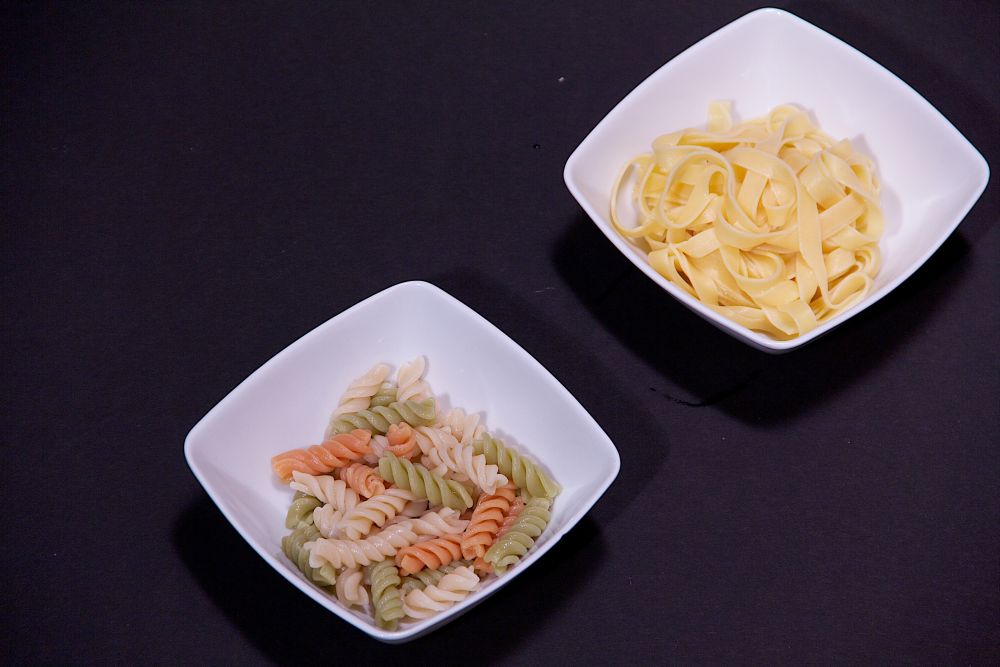
Furthermore, research and development of new products, as well as consolidating the entire range of existing ones in the portfolio represent key strategy points for all players on the frozen food market in Germany. “We pursue our own trends like with our noodle nests or portion packs (see below), but we also receive very many enquiries from our customers on whether we can solve problems for them like with filling up their ready meals or gourmet salads. The same goes for fast casual or quick service chains. Also here, it is about questions of quality, profitability, or operational procedures in restaurants, often even taken as a whole. Recently, our customers can let established brands of portion pack with IQF pasta respectively rice be produced with us whose weight they can determine freely. With this, we complete optimally our 30 to 300 g heavy noodles nests made from long cut pasta in each width. With the combination of both areas, we are known in Europe as one of the leading specialists for completely cooked, portioned deep-frozen pasta and rice,” explain Keck representatives. They conclude that in the future, Keck will be focusing on the customers from the ready meal industry as well as restaurant and quick service chains. They will also not serve directly to food retailers; however, within the boundaries of the private label range of products of retailers who take care of their own marketing, a production would be conceivable.
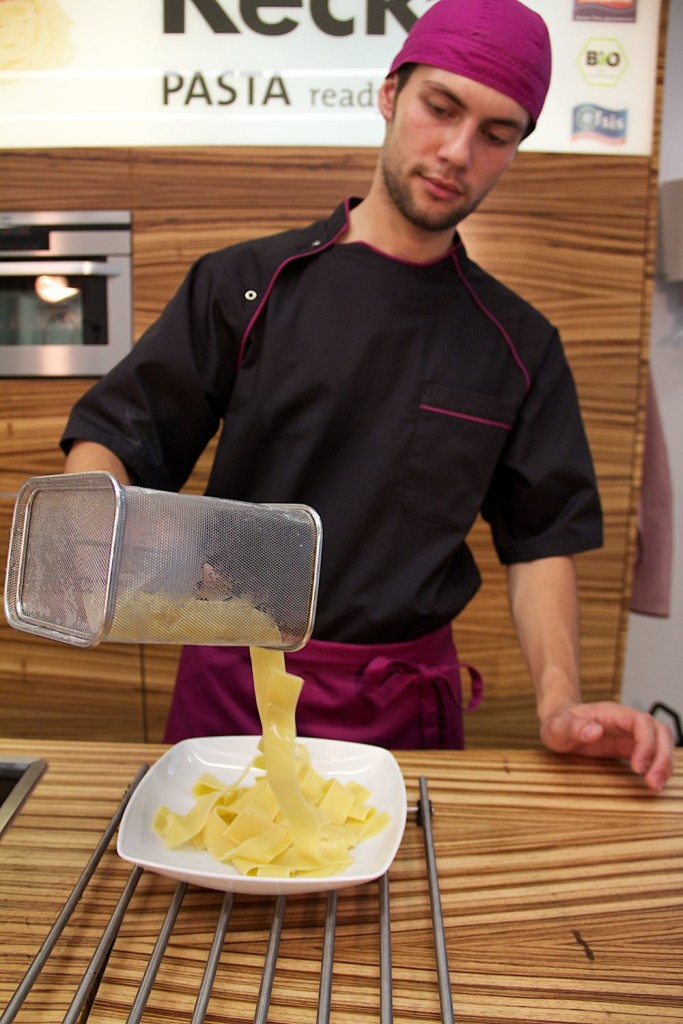
In the important sales markets, Keck is cooperating with partners who know the conditions in the countries very well and have contact to all the important decision makers, in order to strengthen these co-operations further.
On the other hand, Vossko say that they develop many ideas in talks with their customers, as is the case with producers of ready-to-serve meals or gourmet salads as well as for food retailers, to whom they deliver their own brand as well as with private label products. Due to the fact that the trade distinguishes itself in a not insignificant degree with the end consumer by means of its own brand, this has become an extremely dynamic business at home and abroad. However, the company representatives conclude by pointing out some issues that impede a smoother progress, as they see it, especially relating to legislators in the European Union: “As long as we are able to develop freely, we can make very good progress. But some activities of the European Commission impede further development, indeed not always, but sadly too often. One example is the quotas on import amounts from non EU countries. Whereby, it is not about the safety of the goods, but only about walling off the domestic market of the EU. A second important subject is the current problem of finances in the Euro zone. This affects the beneficiary countries as well as the donor countries. We hope that the common currency area is kept, but we are also prepared if the one or the other member pulls out. Because we also export in countries with foreign currency, we can circumvent the currency fluctuations.”